15.10.2026
When Flatter Is Not Always Better
MCML Research Insight – With Leonardo Galli, Wiebke Bartolomaeus, and Holger Rauhut
Imagine hiking through a mountain landscape. A broad, flat valley may look like the easiest route. Yet the flattest path does not necessarily lead where you want to go. A similar idea appears in the …

14.10.2026
MCML at the LRZ Open Day 2026
Open Day at the Garching Research Campus Together With the “Türen Auf Mit Der Maus” Day
On October 3, 2026, the Leibniz Supercomputing Centre (LRZ) opened its doors to the public as part of the Open Day at the Garching Research Campus. The day was held together with the nationwide “Türen …

12.10.2026
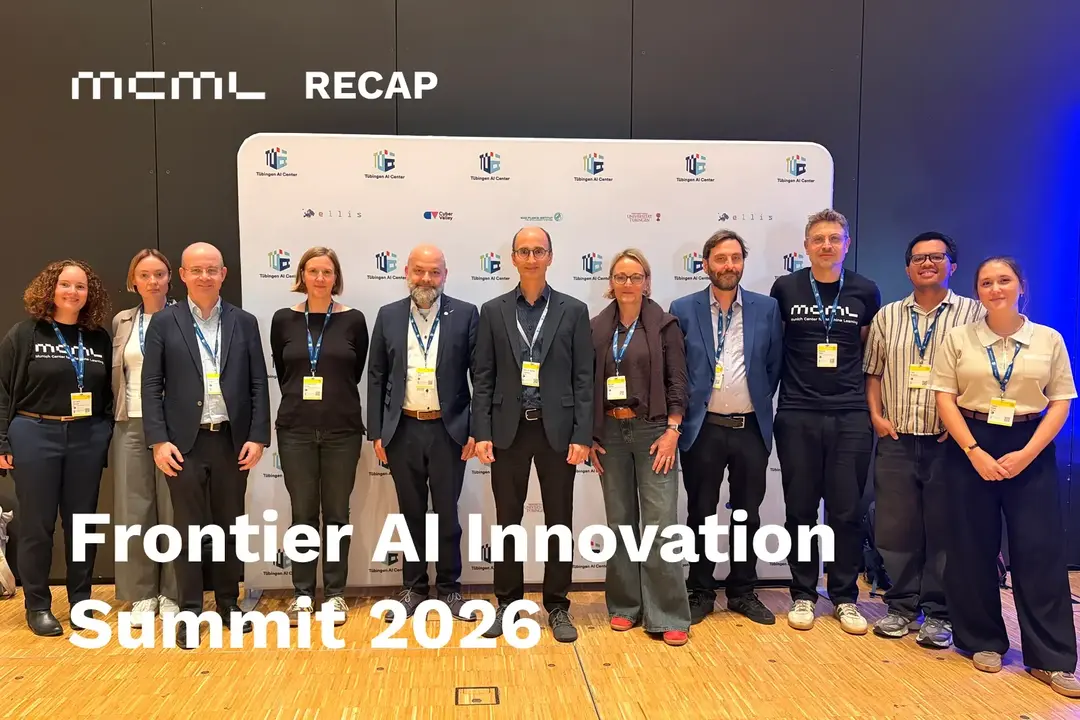
MCML at the Frontier AI Innovation Summit 2026 in Stuttgart
All Hands Meeting of the German AI Centers and ELIAS Alliance Annual Meeting, Hosted by the Tübingen AI Center
On October 7 and 8, 2026, MCML took part in the Frontier AI Innovation Summit at Messe Stuttgart. Hosted by the Tübingen AI Center, this year’s summit brought together the All Hands Meeting of the …

09.10.2026
Digdeep Podcast: Human Friendly Automation – Does AI Work for Humans, or Are We Out in the End?
News From the Digital World by MCML PI Frauke Kreuter and Christof Horn
In this episode of #digdeep, Hanjo Gergs and Lars Schatilow, co-initiators of the Human Friendly Automation Alliance present the ideas about how to handle the rapid AI development. The rapid …

08.10.2026
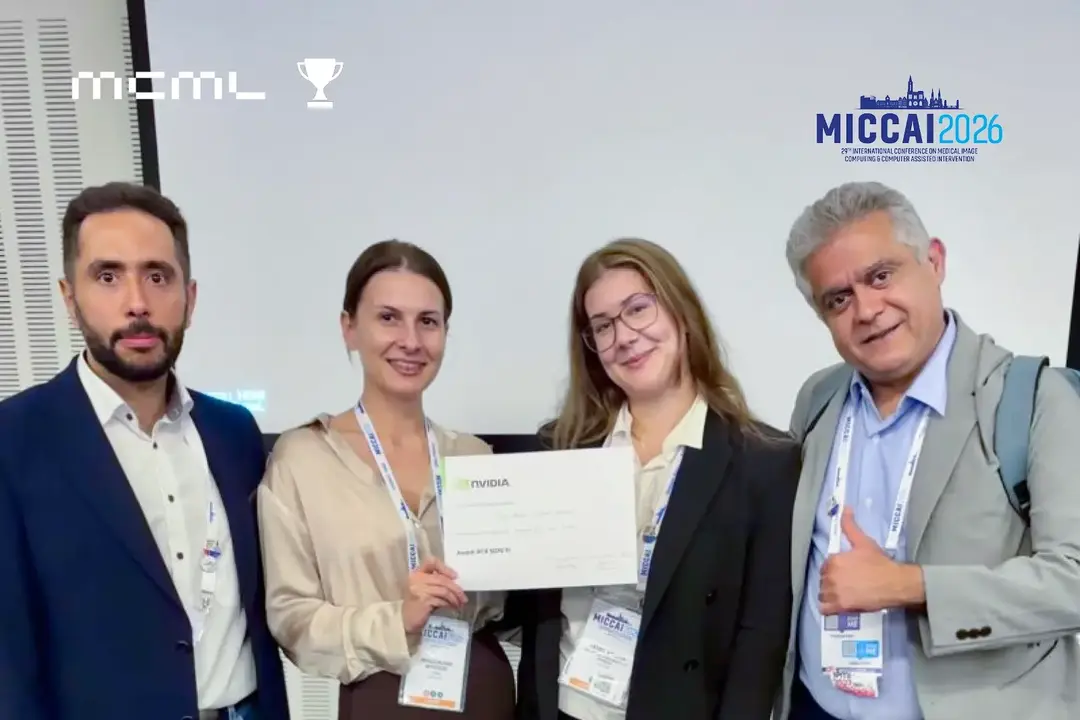
Best Paper Award at ASMUS workshop at MICCAI 2026
Ultra-Wide-NeRF Recognized for Wide Field-of-View Ultrasound Reconstruction
The paper “Ultra-Wide-NeRF: Multivariate Gaussian NeRF for Wide Field-of-View Ultrasound Reconstruction” received the Best Paper Award at ASMUS 2026, the MICCAI Workshop on Medical Ultrasound. The …
08.10.2026
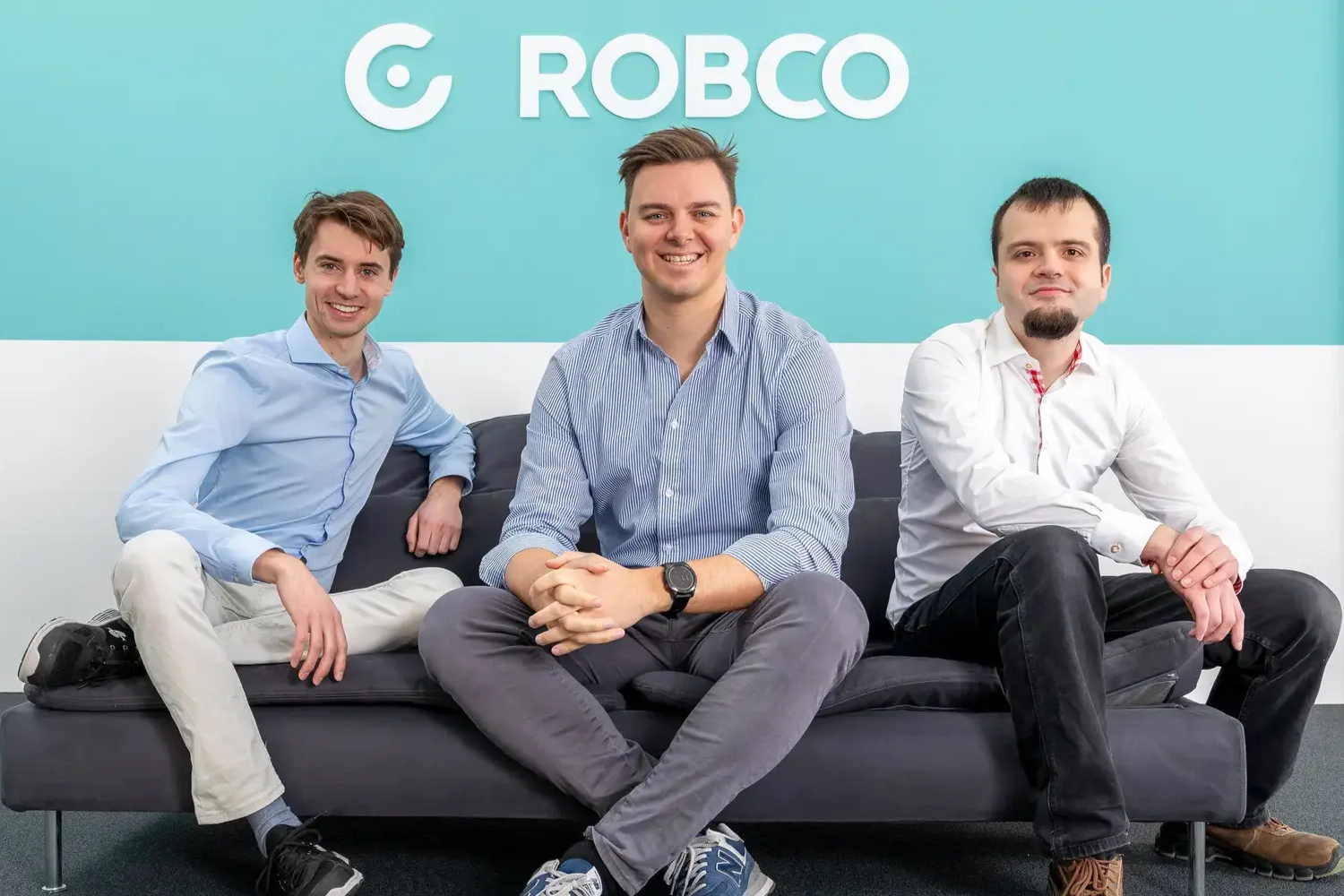
RobCo Is TUM’s 24th Unicorn
Robotics Start-Up Offers a Simple Solution for Industrial Manufacturing
The Munich-based robotics start-up RobCo is the latest unicorn to emerge from the Technical University of Munich (TUM). Founded six years ago by three former robotics students from the TUM Chair of …
05.10.2026
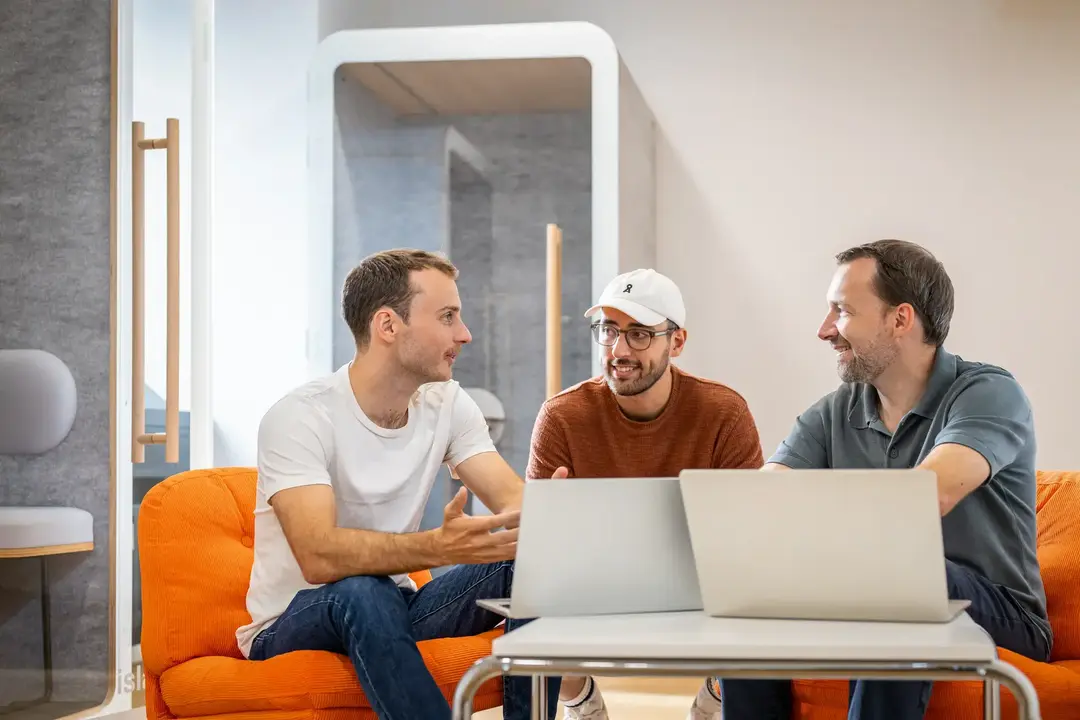
How a Startup Is Making AI Faster and More Sustainable
Pruna AI Develops Optimized, Highly Efficient AI Models
The capabilities of artificial intelligence (AI) are growing rapidly; at the same time, energy consumption and costs are rising. This is where Pruna AI comes in: The startup develops highly efficient …
02.10.2026
TUM and LMU Lead Germany in the World University Rankings 2027
MCML's Two Partner Universities Take the Top Two Places Nationally
Times Higher Education (THE) has released its World University Rankings 2027. The Technical University of Munich (TUM) and LMU Munich, the two universities behind MCML, are ranked first and second …
01.10.2026
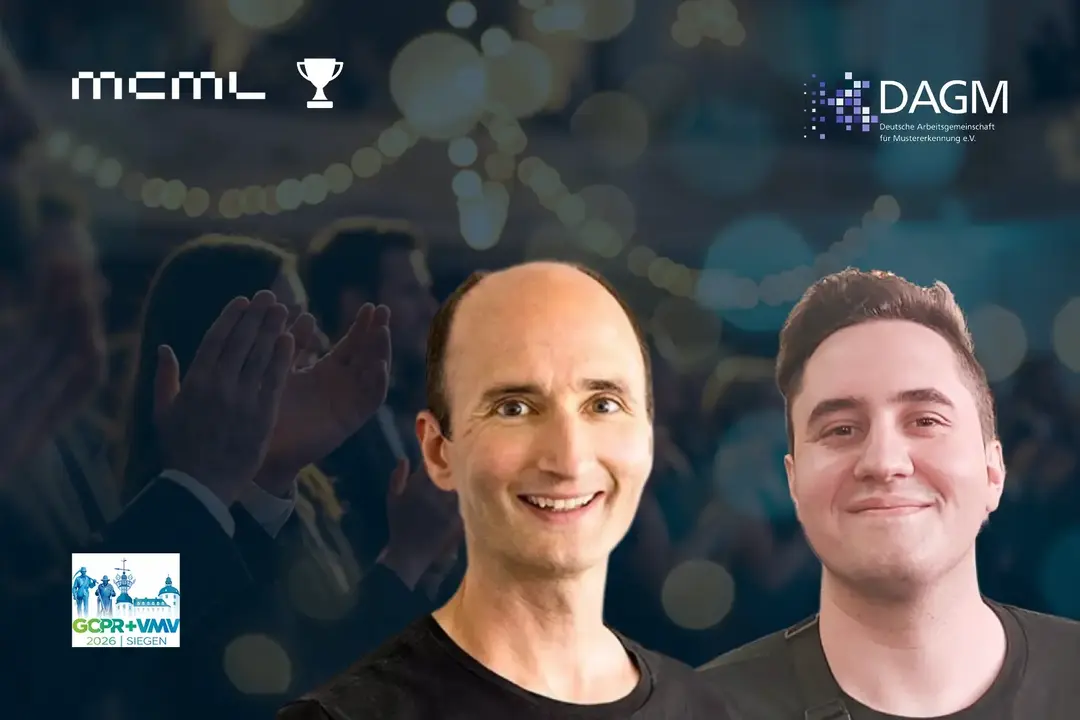
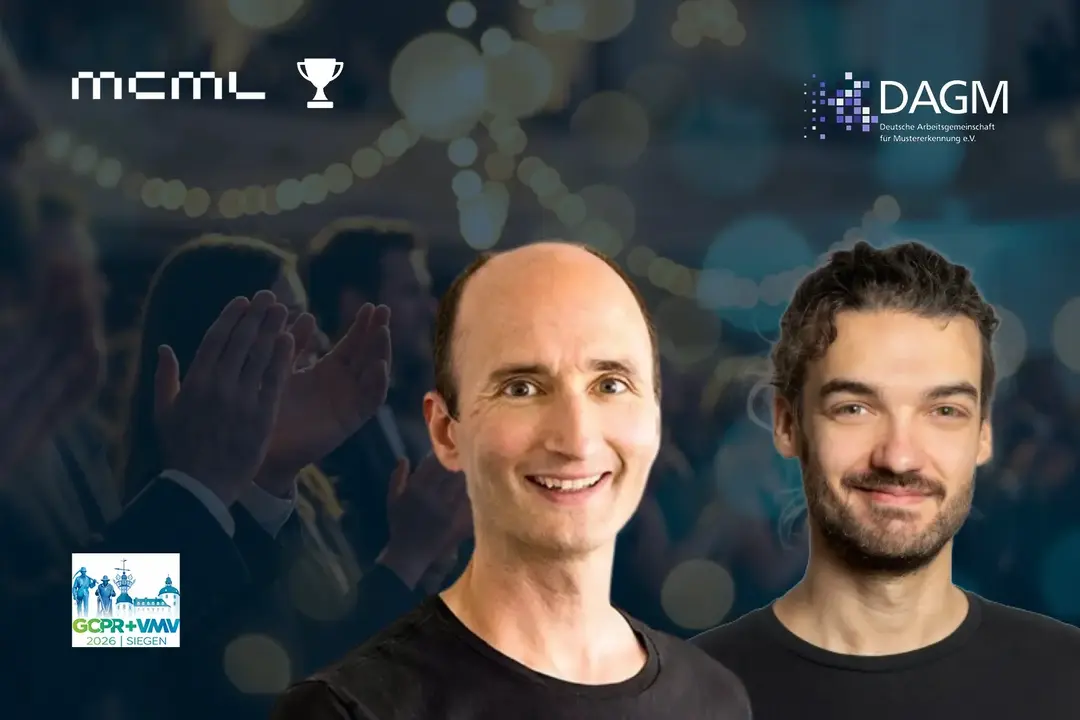
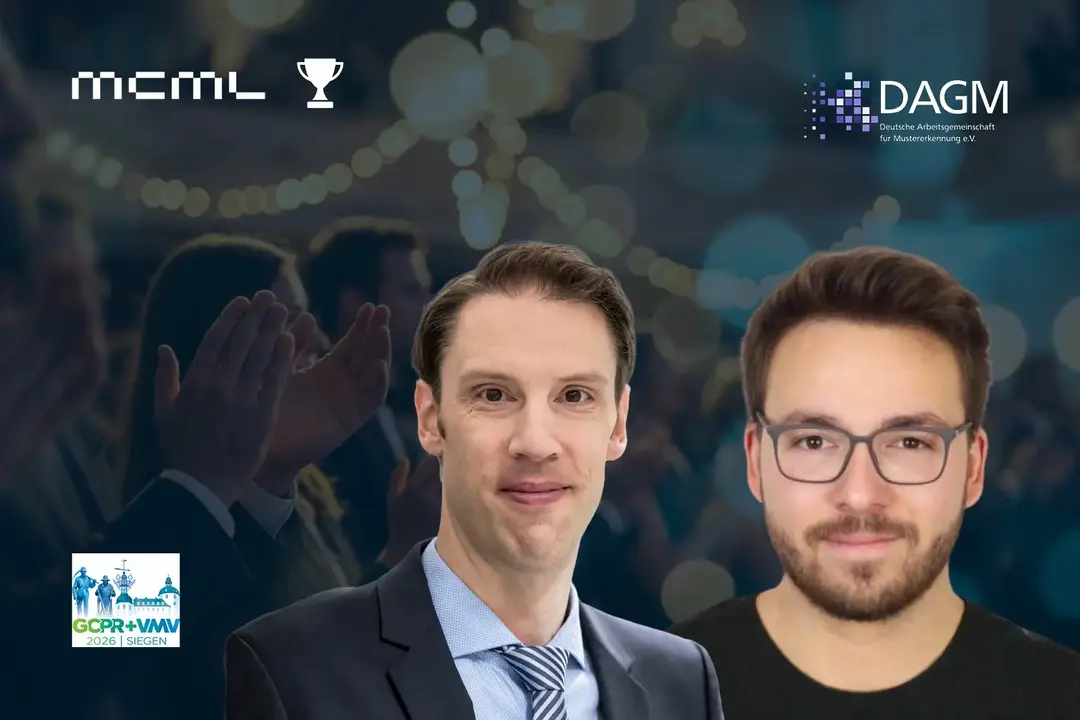
Best Paper Award at GCPR 2026
Outstanding Papers at the German Conference on Pattern Recognition
The 48th German Conference on Pattern Recognition (GCPR 2026) took place from September 22 to 25, 2026, in Siegen. It was held jointly with the 31st Vision, Modeling, and Visualization Symposium (VMV) …
28.09.2026
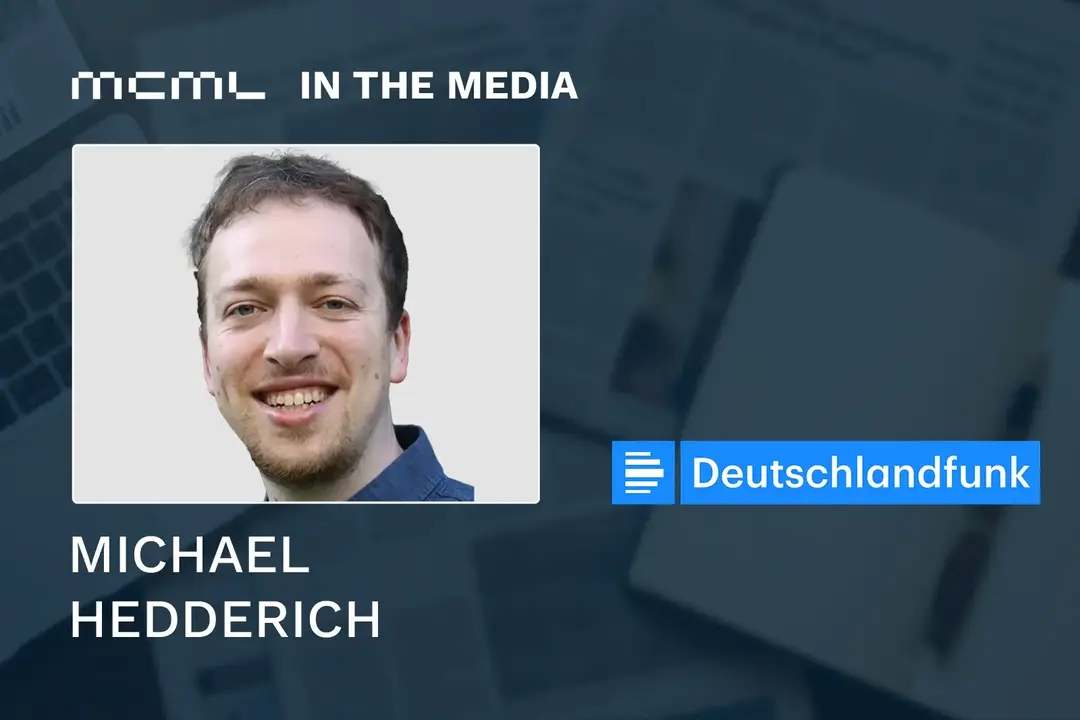
Michael Hedderich Featured in Deutschlandfunk on Small Language Models
Exploring the Technology and Potential of Smaller AI Models
MCML JRG Leader Michael Hedderich is featured as an expert in a recent Deutschlandfunk segment on small language models and their potential to offer alternatives to large AI models. The segment, part …