08.10.2025

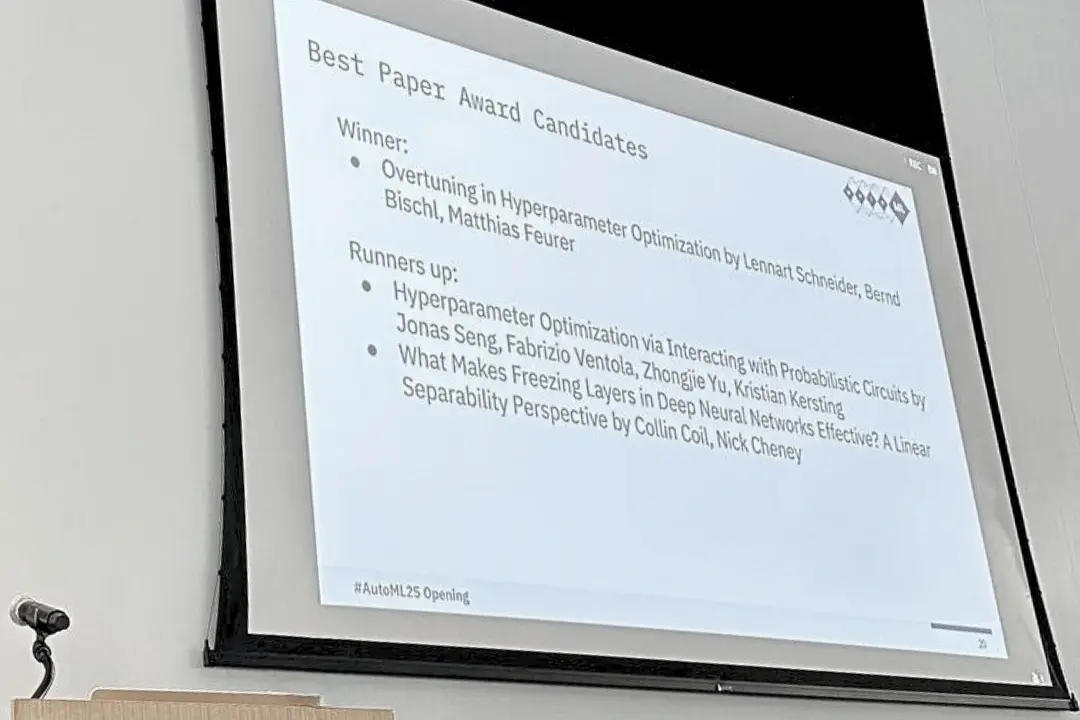
Three MCML Members Win Best Paper Award at AutoML 2025
Our Members Matthias Feurer, Lennart Schneider and Bernd Bischl Honored for Their Work on Hyperparameter Optimization
We are happy to announce that the paper “Overtuning in Hyperparameter Optimization” by MCML Thomas Bayes Fellow Matthias Feurer, MCML Junior Member Lennart Schneider, and MCML Director Bernd Bischl has won the Best Paper Award at the 4th AutoML Conference.
The paper defines and studies overtuning, where hyperparameter optimization can improve validation scores but hurt generalization, and presents a large-scale analysis of factors influencing this effect. These insights will help the AutoML community design more robust and reliable optimization strategies
Congratulations to the team on this outstanding achievement!
Check out the full paper:
Overtuning in Hyperparameter Optimization.
Methods Track @AutoML 2025 - Methods Track at the International Conference on Automated Machine Learning. New York City, NY, USA, Sep 08-11, 2025. Best Paper Award. URL
Related

05.10.2026
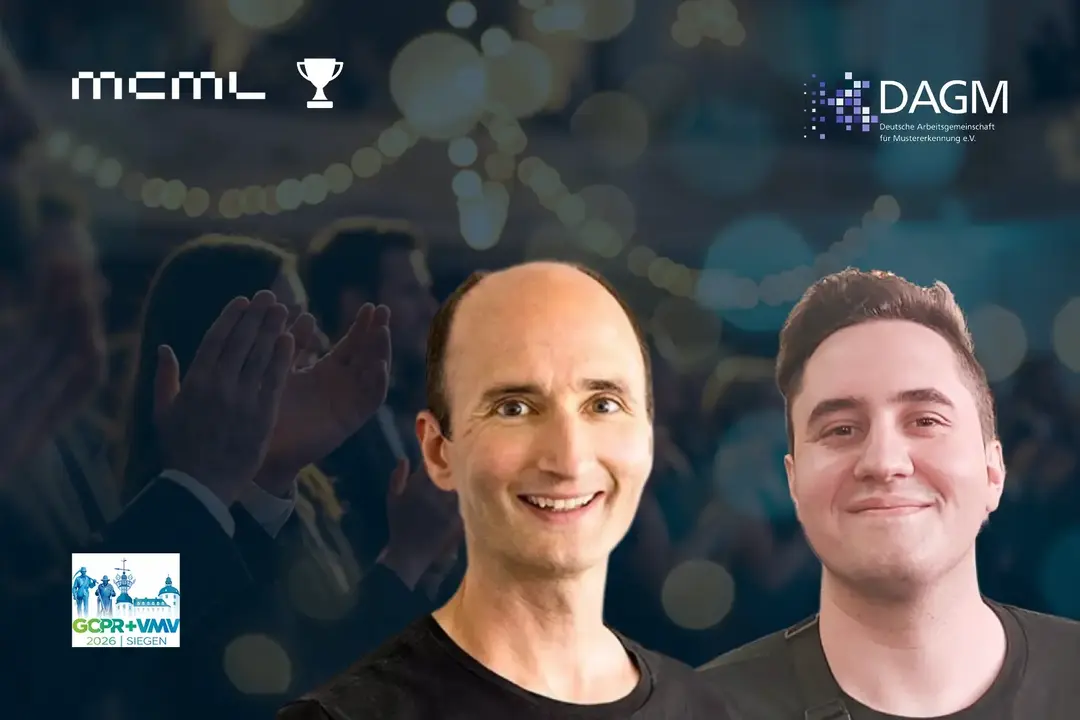
Honorable Mention at GCPR 2026
A GCPR 2026 paper co-authored by MCML Director Daniel Cremers received an Honorable Mention at the conference in Siegen.
05.10.2026
Honorable Mention at GCPR 2026
A GCPR 2026 paper co-authored by MCML Director Daniel Cremers and MCML PI Riccardo Marin received an Honorable Mention.