Home  | News

21.06.2024

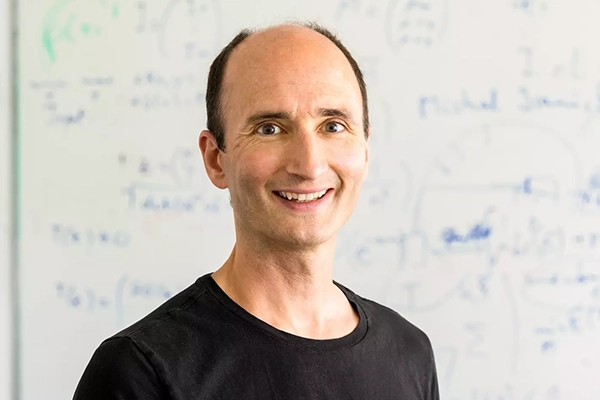
Teaser image to Daniel Cremers about his new method to create precise 3D reconstructions

Daniel Cremers About His New Method to Create Precise 3D Reconstructions

TUM News

Learn more about the latest research results of our Director Daniel Cremers.

He and his team have succeeded in creating precise 3D reconstructions using only images from two cameras. Previously, such reconstructions required many hundreds of perspectives. With this new method, it is possible to make significant advances in the preservation of historical moments as well as in autonomous driving.

#research #cremers
Subscribe to RSS News feed

Related

Link to "See, Don’t Assume": Revealing and Reducing Gender Bias in AI

18.12.2025

"See, Don’t Assume": Revealing and Reducing Gender Bias in AI

ICLR 2025 research led by Zeynep Akata’s team reveals and reduces gender bias in popular vision-language AI models.

Link to Fabian Theis Featured in Handelsblatt on the Future of AI in Precision Medicine

16.12.2025

Fabian Theis Featured in Handelsblatt on the Future of AI in Precision Medicine

MCML PI Fabian Theis discusses AI-driven precision medicine and its growing impact on individualized healthcare and biomedical research.

Link to Gitta Kutyniok Featured in VDI Nachrichten on AI Ethics

16.12.2025

Gitta Kutyniok Featured in VDI Nachrichten on AI Ethics

Gitta Kutyniok discusses measurable criteria for ethical AI, promoting safe and responsible autonomous decision-making.

Link to Hinrich Schütze Featured in WirtschaftsWoche on Innovative AI Approaches

16.12.2025

Hinrich Schütze Featured in WirtschaftsWoche on Innovative AI Approaches

Hinrich Schütze discusses Giotto.ai’s efficient AI models, highlighting memory separation and context-aware decoding to improve robustness.

Link to Xiaoxiang Zhu Featured in Focus Online on Global 3D Building Atlas

16.12.2025

Xiaoxiang Zhu Featured in Focus Online on Global 3D Building Atlas

Xiaoxiang Zhu maps 2.75B buildings in 3D, revealing global urbanization, housing, and social inequalities using AI.

Back to Top