24.11.2026
Research Stay at Stanford University
Rickmer Schulte – Funded by the MCML AI X-Change Program
From April to August 2026, I spent five months as a visiting student researcher in the group of Prof. Emmanuel Candès at the Department of Statistics at Stanford University. As a PhD student at LMU Munich supervised by MCML PI David Rügamer and a Junior Member of MCML, I work at the intersection of statistics and machine learning, in particular on statistical inference that leverages flexible machine learning methods. Emmanuel’s group has made fundamental contributions bridging the two fields, which made it an ideal place to deepen and broaden this line of research. The stay was generously supported by the MCML AI X-Change Program and a DAAD research grant for doctoral students.
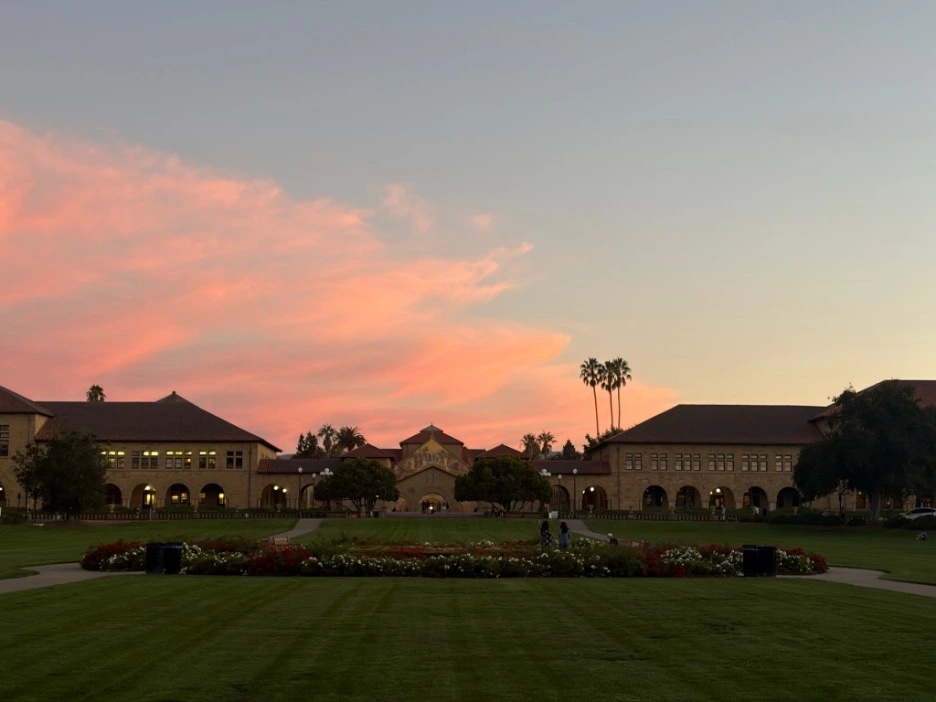
Academic Life at Stanford
Emmanuel’s work has shaped several fields over the course of his career, from compressed sensing to matrix completion, and in recent years his group has focused on the intersection of statistics and machine learning. A central theme is the development of statistical frameworks such as conformal prediction and model-X knockoffs, which can be wrapped around any machine learning model while still providing rigorous statistical guarantees under minimal assumptions. I especially appreciated the group’s openness to a wide variety of research questions, combined with a consistent drive to tackle problems that are both intellectually interesting and practically relevant. Emmanuel’s focus on fundamental scientific questions shaped our joint projects as well as the discussions in our meetings. One idea that particularly stayed with me is that much of research consists of figuring out which questions are worth pursuing in the first place. This perspective strongly influenced my work during the stay and will continue to do so beyond it.
While I came to Stanford with a specific project in mind, new ideas emerged over time from meetings and discussions, and we ended up working on several projects with topics ranging from conformal prediction to knockoffs. The two frameworks address quite different problems, but both have become influential in modern statistics. Knockoffs, which are particularly popular in genetics, tackle the question of which of many features truly matter for an outcome. They construct synthetic “knockoff” copies of the features that act as negative controls. This allows selecting relevant features while controlling the false discovery rate, the expected fraction of false findings among all selections, without assumptions about how the outcome depends on the features. Conformal prediction, in contrast, turns the predictions of any machine learning model into prediction intervals that are guaranteed to contain the true outcome with a pre-specified probability, under mild assumptions on the data.
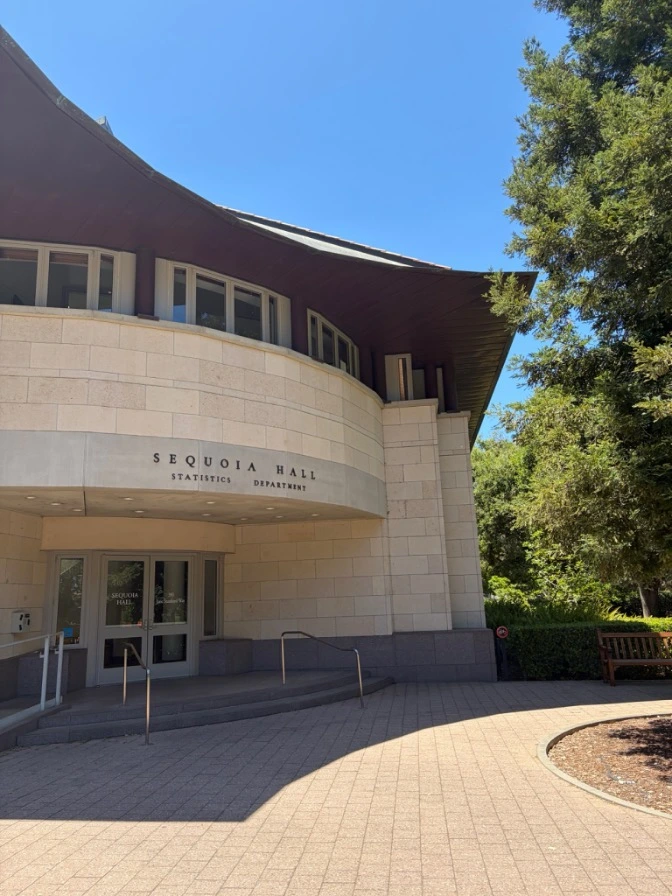
Sequoia Hall, home of the Department of Statistics
One of our projects addresses conditional coverage in conformal prediction. The conformal prediction guarantee above holds on average over all inputs, which is known as marginal coverage. Although it is mathematically elegant and has made the framework popular, in practice, it is often more desirable to obtain the stronger guarantee of coverage conditional on the features, for example for every patient subgroup rather than only for patients on average. While exact conditional coverage is impossible to achieve without further assumptions, we build on recent work in this direction and develop conformal prediction methods with improved conditional coverage. It was a great pleasure to work with Emmanuel on these topics and to benefit from his broad expertise and experience. We are currently in the phase of finishing up these projects. Beyond them, the research visit at Stanford has been enormously inspiring, sparking a number of ideas for future research.
During my stay, I had an office in Sequoia Hall, home of the Department of Statistics. Thanks to the building’s modest size, I got to know most people in the department over time, including members of other groups. It was also a fun experience to share the office floor with renowned statisticians such as Bradley Efron, the inventor of the bootstrap, and to chat with him in the hallway about topics of great scientific importance, such as the latest World Cup matches.
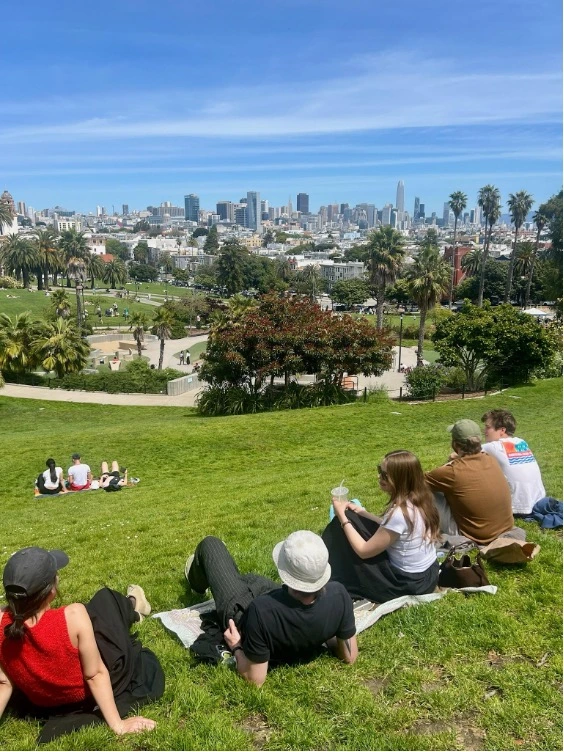
Day trip to San Francisco, Dolores Park
Beyond Sequoia Hall, I enjoyed the broad range of events across campus, with numerous talks and seminars every week. Besides the weekly seminar of the Statistics Department and our group meetings, I regularly attended the econometrics seminars and selected other seminars. Over the summer, I also had the chance to present my own work in one of the econometrics seminars. It was a unique experience to attend talks by, and alongside, renowned researchers including Nobel laureates, and to be part of the vibrant research atmosphere on campus, meeting many people from different backgrounds (and often ending up playing volleyball with them at the end of the day).
Personal Life at Stanford
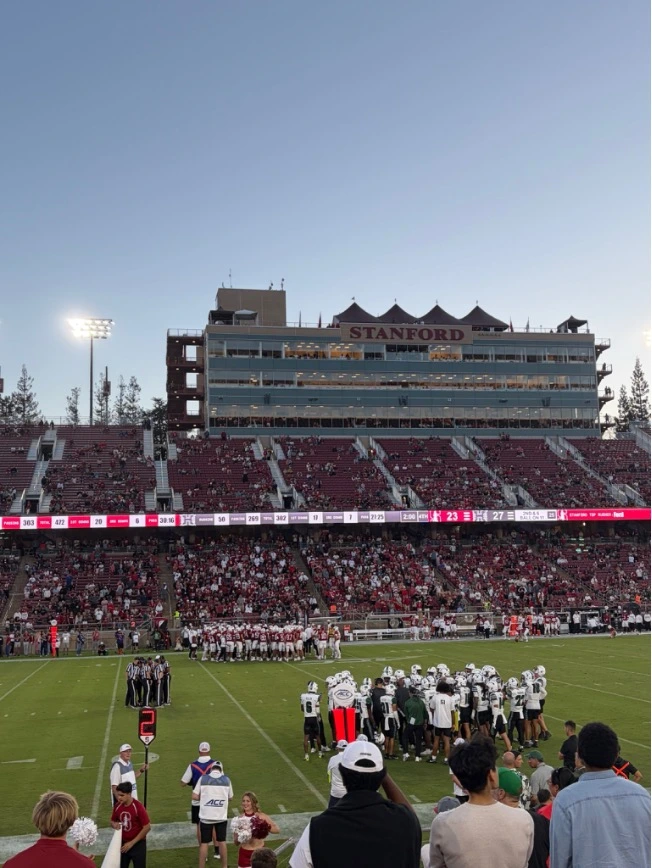
Home game of the Stanford Cardinal football team
I was lucky to live right on campus, in a shared apartment in Rains, one of Stanford’s graduate residences. Living on campus made everyday life very easy, as the office and almost everything else were just a short bike ride away. Rains is also known for its social atmosphere, and since most of my flatmates and neighbours were fellow graduate students or visiting researchers, it was easy to meet new people. Beyond the residence, one frequently runs into familiar faces across campus, at the dining halls or sports facilities, which gives the large campus an almost small-town feel.
The campus also offers plenty to do besides research, including multiple gyms and pools, tennis and basketball courts, a bouldering gym and much more. There are also many volleyball courts spread across campus, which are usually packed with students playing after class. On top of that, there are numerous social events, from invited talks by speakers from tech and politics to sports events such as home games of the Stanford Cardinal, the university’s American football team.
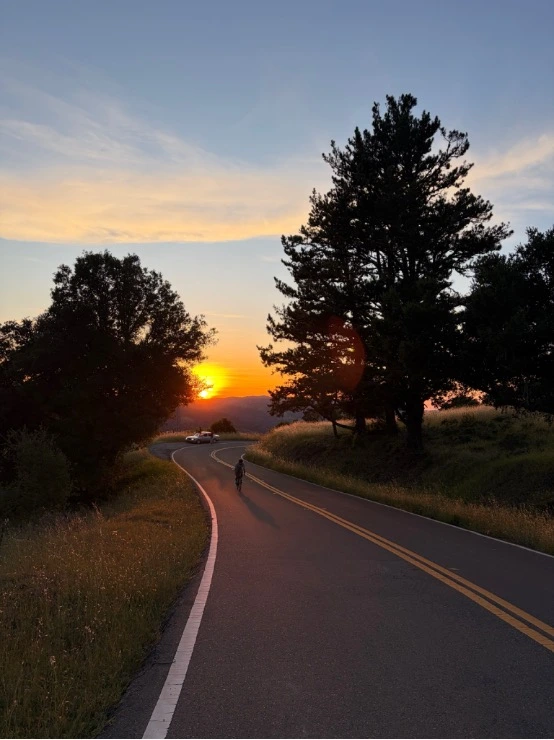
Cycling up Page Mill Road
Just behind campus, the hills are ideal for road cycling, hiking or running, for example around the Dish, a popular open-space area named after the large radio antenna on its hilltop. The steep climb up Page Mill Road next to the Dish rewards you with views over the entire Bay Area and, on clear days, all the way to the Pacific when cycling along the ridge of the Santa Cruz Mountains. Further afield, San Francisco with its lively neighbourhoods is less than an hour away by Caltrain, and Santa Cruz with its great surf spots is a similar distance by car, making both ideal for day trips, while Highway 1 along the coast, Lake Tahoe and Yosemite are perfect for weekend trips. Combined with the Bay Area’s sunny and mild climate, this led a colleague to sum it up nicely: you can work a lot at Stanford, but as soon as you stop working, you are immediately on holiday.
Concluding Remarks
I am deeply grateful to everyone who made this research stay possible. First and foremost, I would like to thank Emmanuel for hosting me at Stanford and for the many insightful discussions throughout our projects, as well as his entire group and the department for welcoming me so warmly and making the past months such an enriching and fun time. I would also like to thank my supervisor David for encouraging and supporting me in pursuing this research stay. Last but not least, I would especially like to thank the MCML AI X-Change Program and the DAAD for their generous support, which made this unique experience possible.

View from the Santa Cruz Mountains over the clouds above the Pacific
Related
17.11.2026
Enkelejda Kasneci: The Real Value of AI in Education Is More Time for Humans
Enkelejda Kasneci explores how AI can provide personalized learning support while keeping human interaction and student agency at the center.
12.11.2026
One Toolbox for Many Kinds of Uncertainty
MCML researchers introduce probly, a unified Python package for uncertainty-aware machine learning, presented orally at NeurIPS 2026.
29.10.2026
Teaching Language Models to Express Uncertainty
An ICLR 2026 paper shows how reinforcement learning improves confidence estimates from language models.