26.06.2026
Research Stay at National University of Singapore
Bailiang Jian – Funded by the MCML AI X-Change Program
During my academic visit to Singapore. I am happy to work with the MVI-Lab lead by Prof. Hongwei Bran Li. The group works on a wide range of topics in medical image analysis, including CT-PET imaging and brain MRI research. This visit was made possible by the MCML AI X-Change program, whose support enabled me to explore a new international research environment and broaden my perspective on AI for Medicine.
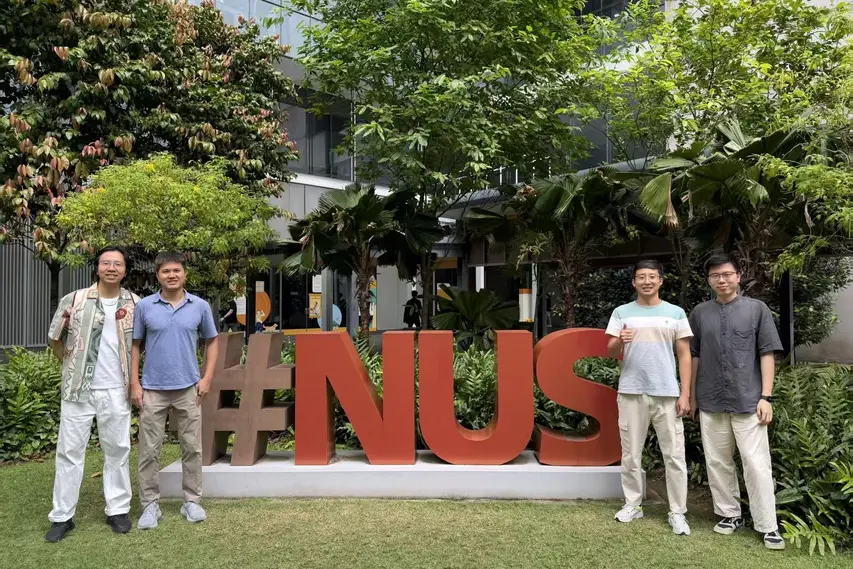
Group photo with the research group
One aspect of the research environment at NUS that impressed me most was the close connection between AI researchers and clinical PET researchers. For an AI researcher, it was extremely valuable to learn more about how real PET images are read and interpreted, and how different PET imaging methods can highlight disease-related characteristics in the human body. This experience reminded me that progress in medical AI is not only driven by better algorithms, but also by a deep understanding of clinical needs, imaging mechanisms, and real-world medical workflows.
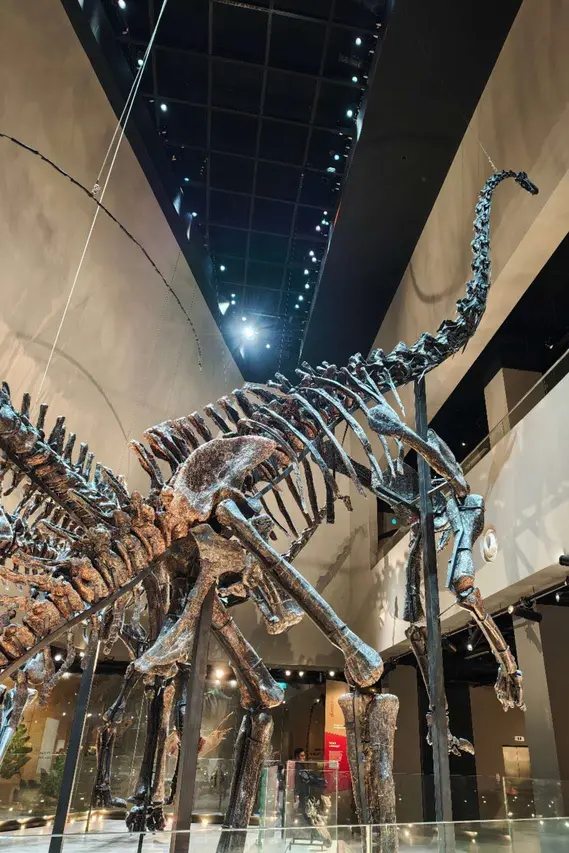
Impressive dinosaur fossils at the Lee Kong Chian Natural History Museum on the NUS campus.
In our academic discussions, we focused on how different types of scans can be combined to provide a more complete picture of disease. A central topic was image registration, which means aligning images so that the same anatomical structures correspond across different scans. This is especially useful in oncology imaging when combining CT and PET: CT provides detailed anatomical information, while PET can reveal functional and metabolic activity in tumors and organs. Accurate registration helps bring these complementary sources of information together, supporting both clinical interpretation and further computational analysis.
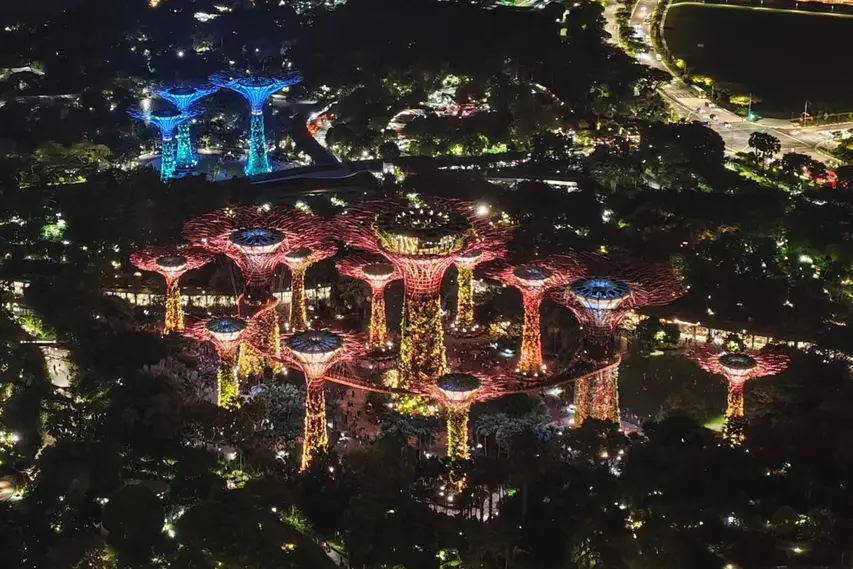
A view of Singapore’s night skyline and the Supertrees at Gardens by the Bay.
Building on this, we also discussed whether missing or complementary imaging information could be estimated from available scans. This is an exciting direction because some imaging modalities are expensive, time-consuming, or require contrast agents or radioactive tracers. At the same time, it is highly challenging, since different modalities are often based on very different physical principles and capture different aspects of disease. Because of this gap, clinical researchers are understandably cautious about whether a reliable mapping between modalities can truly be established. This also led to a broader discussion on trustworthy AI: when generative models estimate medical images or missing information, the results should not only look realistic, but also communicate when they are uncertain. One promising idea is to combine generative models with uncertainty estimation methods such as conformal prediction. In simple terms, this can help the model express not only what it predicts, but also how much confidence we should place in that prediction. This is especially important in clinical settings, where overconfident AI-generated results may create risks without careful validation.
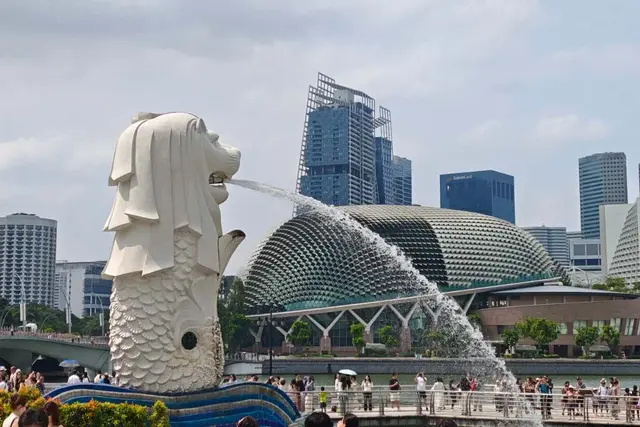
The Merlion, one of Singapore’s most iconic landmarks.
Beyond the lab, the NUS campus and the city of Singapore also made this exchange experience memorable. On campus, I visited the Lee Kong Chian Natural History Museum, where three huge sauropod dinosaur fossils stand in the main gallery. Seeing them in person was truly impressive and offered a fascinating glimpse into natural history. During my free time, I also went hiking at MacRitchie Reservoir, where I experienced Singapore’s tropical rainforest landscape and even encountered wild macaques along the trail. In addition, the city’s skyline, the Supertrees at Gardens by the Bay, and the iconic Merlion gave me a vivid impression of Singapore as a city where nature, technology, and urban life are closely intertwined. After experiencing all this, it was easy to understand why Singapore is often called a “City in Nature.”
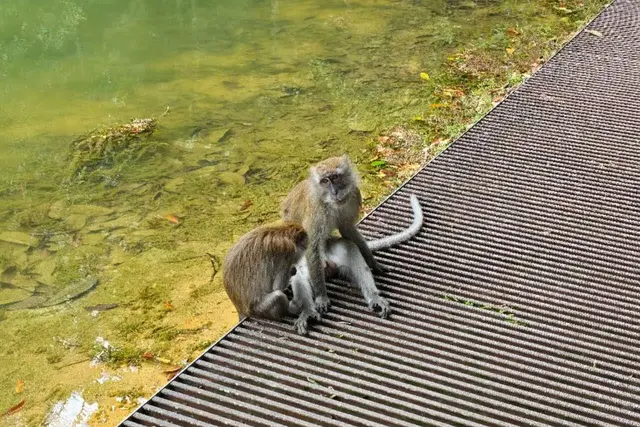
Wild macaques encountered during a hike at MacRitchie Reservoir.
Looking back, this academic journey would not have been possible without the support of the MCML AI X-Change program. The program gave me the opportunity to experience a different research culture, build international connections, and reflect on my own work from new perspectives. Many thanks to Prof. Hongwei Bran Li for warmly welcoming me into the research group and for the inspiring discussions during my stay. Finally, a special thanks to Prof. Benedikt Wiestler and Prof. Christian Wachinger, for the continuous guidance, encouragement, and support that gave me the confidence to take this rewarding step abroad.
Related


23.10.2026
MCML at EMNLP 2026
MCML researchers are represented with 47 papers at EMNLP 2026 (31 Main, 11 Findings, and 5 Workshops).
15.10.2026
When Flatter Is Not Always Better
In their ICML 2026 paper, MCML researchers show why the flattest regions found during neural network training are not always the best.

13.10.2026
Björn Schuller: What Your Voice Reveals About Your Health
MCML PI Björn Schuller explores how AI can analyze the human voice to detect signs of disease and reveal insights into our health.