29.06.2026
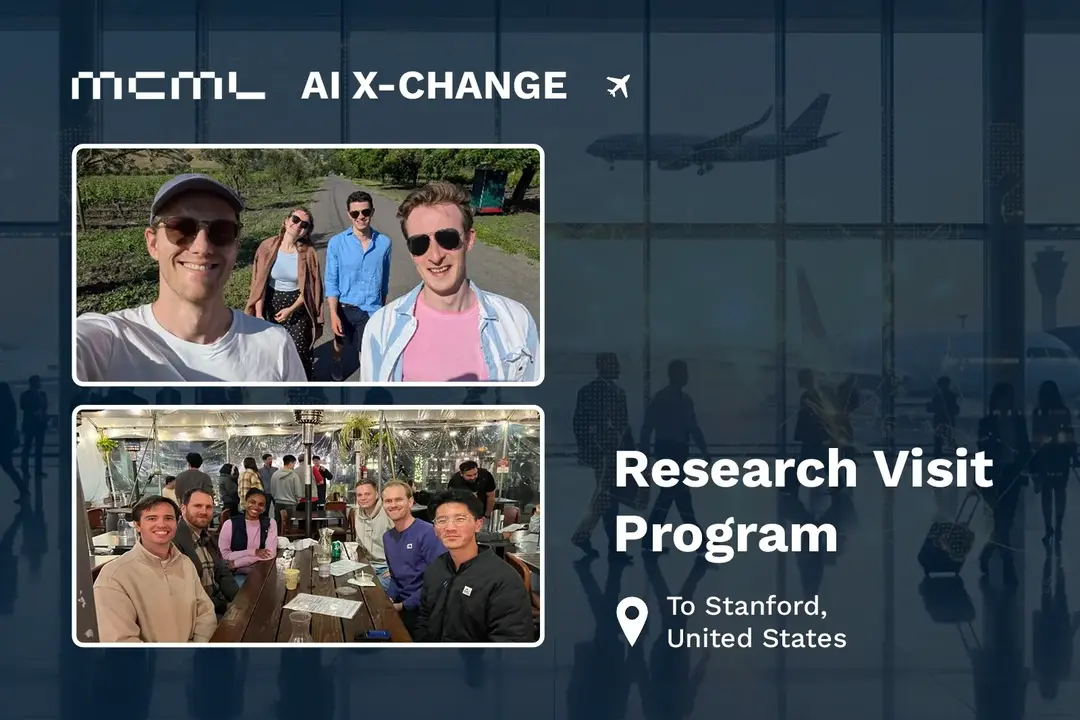
Research Stay at Stanford University
Felix Dülmer – Funded by the MCML AI X-Change Program
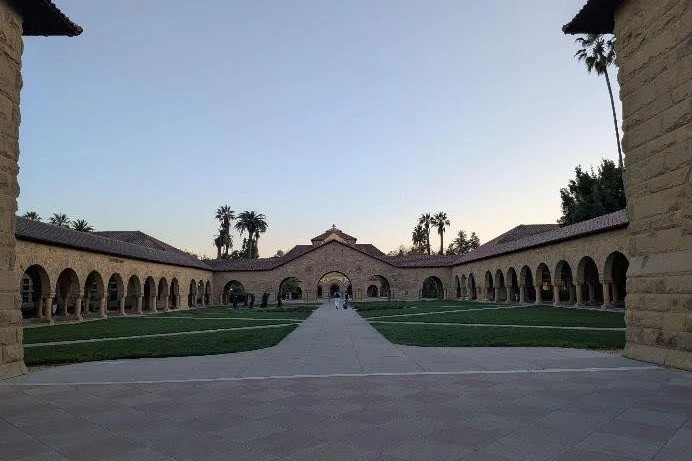
From March to May 2026, I had the opportunity to spend three months as a visiting researcher at Stanford University, hosted by Prof. Jeremy Dahl and the Ultrasound Imaging and Instrumentation Lab. Supported by the MCML AI X-Change Program, this stay allowed me to work in a research environment with deep expertise in ultrasound image formation, beamforming, and speed-of-sound estimation.
My own PhD work has so far focused strongly on inverse problems in medical ultrasound, including physics-based simulation, differentiable rendering, and reconstruction from ultrasound images. The research stay at Stanford extended this perspective in an important direction: instead of only reconstructing geometry or image appearance, I explored how acoustic tissue properties themselves, in particular the spatial distribution of speed of sound, can be estimated through differentiable optimization.
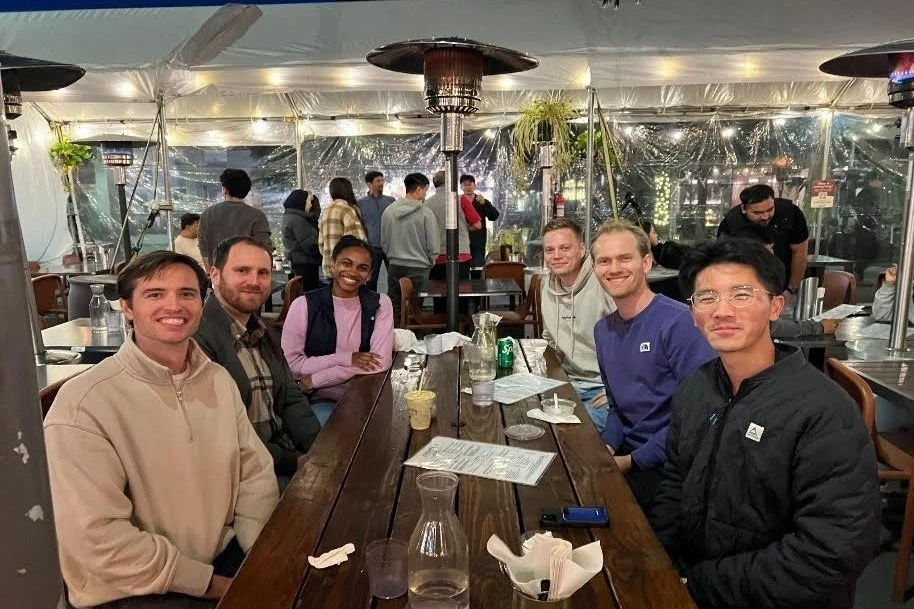
Scientific Work: Differentiable Bent-Ray Optimization for Speed of Sound
The Ultrasound Imaging and Instrumentation Lab provided an ideal environment for this topic. The group combines a strong methodological understanding of ultrasound physics with practical experience in acquisition systems, beamforming, and quantitative ultrasound imaging. This was particularly valuable for me because speed-of-sound optimization sits exactly at the interface between physics, signal processing, and inverse problem formulation.
During the stay, I focused on speed-of-sound optimization using a bent-ray formulation. In conventional ultrasound reconstruction, a constant speed of sound is often assumed, although real tissue exhibits spatial variations. These variations affect travel times, phase coherence, focusing quality, and ultimately the diagnostic appearance of the image. Estimating speed of sound is therefore both a physically meaningful inverse problem and a potential route toward more quantitative ultrasound imaging.
Building on the lab’s expertise in this area, I developed a differentiable optimizer for bent-ray speed-of-sound optimization. The central idea was to model ultrasound propagation not simply as straight paths through tissue, but to account for non-straight propagation caused by spatial variations in acoustic velocity. This allowed me to formulate speed-of-sound estimation as an optimization problem in which the acoustic parameter field can be updated through differentiable propagation and image-formation objectives.
This project connected naturally to my previous work on inverse problems and differentiable ultrasound simulation but also pushed it into a new regime. While my earlier work often focused on reconstructing surfaces, scattering structures, or ultrasound image formation from known acoustic assumptions, the Stanford project required me to think more directly about the acoustic medium itself. In this sense, the stay broadened my research perspective from “how can we reconstruct anatomy from ultrasound?” toward “how can we jointly reason about anatomy, propagation, and tissue-specific acoustic properties?”
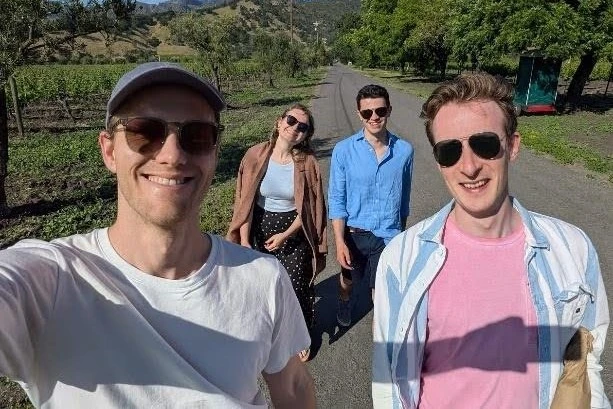
Life at Stanford and Personal Reflections
Beyond the technical work, the stay was personally and scientifically very valuable. Being part of the Stanford research environment gave me the chance to experience a different academic culture, attend seminars, exchange ideas with students and researchers, and discuss projects in an open and collaborative atmosphere. Many of the most useful insights came from informal conversations, whether about ultrasound modeling, experimental design, or the broader challenges of translating computational methods into practical imaging systems.
One aspect that particularly stood out was the wide range of opportunities available to Stanford students and visiting researchers. In addition to access to excellent research facilities, libraries, and laboratory equipment, the Stanford ID provides access to a large variety of extracurricular resources. These include the university’s extensive sports facilities, attendance at sporting events, and a rich cultural program on campus. Throughout my stay, I was able to attend several events, including performances at the Bing Concert Hall, all of which contributed to a vibrant and enriching campus experience.
My housing situation also played an important role in making the stay enjoyable. I lived in a shared house with around fifteen people, all of whom were affiliated with Stanford in some way. This made it very easy to connect with others and quickly become part of a social community. Beyond spending time together in everyday life, we regularly organized cooking evenings and game nights, creating a lively and welcoming atmosphere in the house.
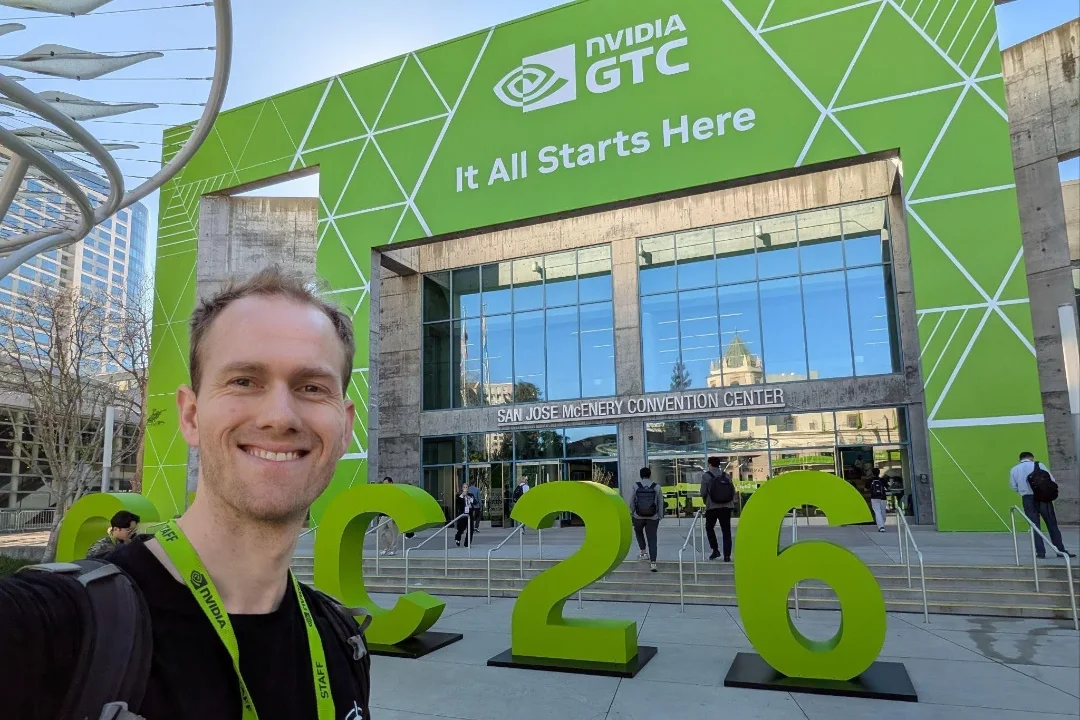
Conference Visit
The house was located close to campus, making it easy to commute by bicycle, which is one of the most common ways of getting around Stanford. On weekends and during free time, we also explored the surrounding area together. Highlights included trips to Napa Valley and Redwood National Park, hiking excursions in nearby nature reserves, and visits to San Francisco. These experiences provided a great balance to the research work and allowed me to experience both the university environment and the broader Bay Area.
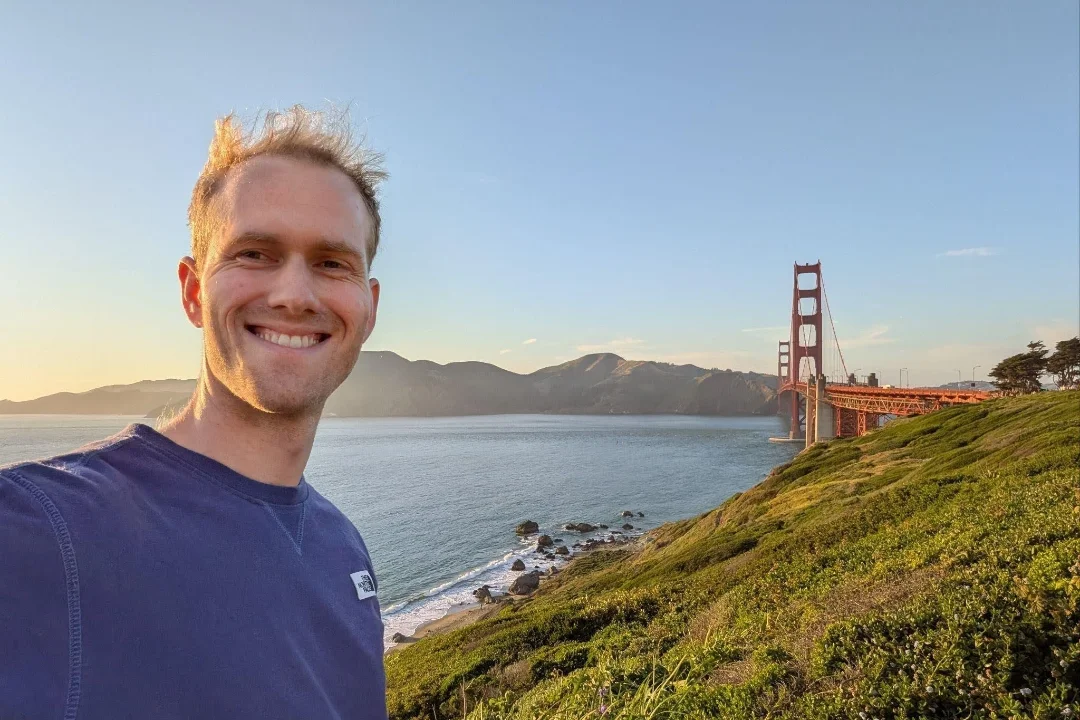
Golden Gate Bridge at sunset.
Outlook
The research stay opened several directions that I hope to continue after returning to Munich. The differentiable bent-ray optimizer provides a foundation for further work on speed-of-sound reconstruction, physics-based ultrasound image formation, and potentially joint optimization of tissue properties and anatomical structure. More broadly, the exchange strengthened the connection between my work at TUM and ongoing research in quantitative ultrasound imaging at Stanford.
I am very grateful to Prof. Jeremy Dahl and the members of the Ultrasound Imaging and Instrumentation Lab for hosting me and for the many insightful discussions throughout the stay. I also sincerely thank MCML and the AI X-Change Program for supporting this visit. The opportunity to spend time at Stanford was highly valuable for my scientific development and helped me build new perspectives on ultrasound imaging, inverse problems, and international research collaboration.
Related

24.09.2026
Barbara Plank: Building Language Technology for Everyone
MCML PI Barbara Plank explores inclusive language technology and the challenges of building AI that supports linguistic diversity.
14.09.2026
Björn Eskofier: The Missing Ingredient for AI in Medicine Is Real-World Data
MCML PI Björn Eskofier explains why real-world data is key to using AI for personalized treatment and more empowered healthcare.