27.01.2026
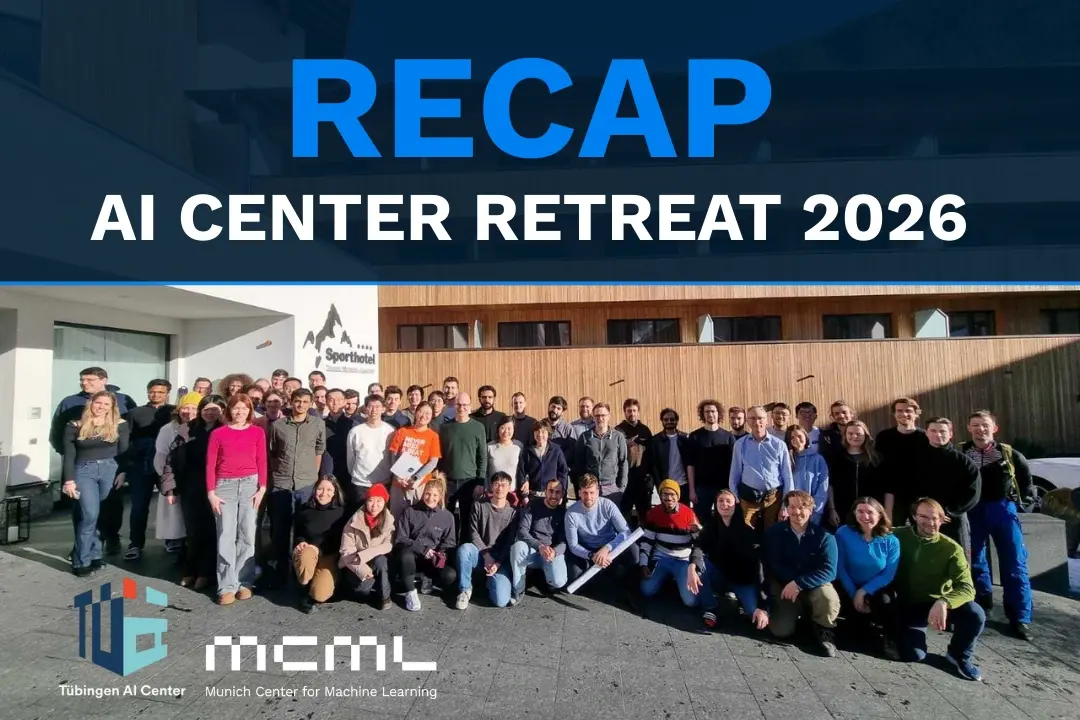
Joint Retreat of MCML and TUEAI Center on the Latest Advances in Computer Vision
Short Recap
In January 2026, two research groups of the MCML and Tübingen AI Center met for a four-day retreat in Gaschurn/ Austria. About 60 researchers joined for talks and poster sessions. The joint retreat highlighted the latest advances in Computer Vision, driven by foundational models, generative AI, and 4D reconstruction and deformation methods.
A central topic was 3D and 4D spatial reasoning, from the macro-scale of aerial UAV localization through orthographic geodata, to the visual-interial tracking of hands and humans. Together, these efforts reflect a push toward robust spatial intelligence that works in broad real-world settings.
One of the most discussed topics was generative modeling, touching both geometry, motion, and appearance synthesis. Interestingly, there have been discussions around different data modalities. New approaches to 3D generation and editing using code, diffusion in pixel-space, as well as combining unpaired data across different modalities seem promising directions to cope with the limited amount of available 3D/4D data.
Human motion emerged as another central topic, explored from several perspectives. Talks covered motion prediction across different skeleton structures, part-based motion composition (FrankenMotion), and the integration of semantic information into motion models. This work signals a move away from rigid motion-capture pipelines toward more flexible and general human representations.
The program also featured contributions in theory for learning, optimization, and geometry. Topics included learned optimizers for 3D Gaussian Splatting, diffusion steering through GG-Langevin dynamics, analysis of language models’ plasticity, and Finsler geometry to model asymmetric relations.
Finally, broader system-level discussions rounded out the retreat. Talks on physical AI emphasized the need for diverse data to bridge the gap between simulation and the real world. Sessions on unpaired multimodal learning highlighted how models can learn from disconnected data sources.
Entrepreneurial sessions such as StartUp101 and an informal fireside chat brought industry perspectives into the mix. Overall, the retreat portrayed a field moving toward integrated, physically grounded, and generative AI systems, supported by deeper theory and a growing startup ecosystem.
Related

14.10.2026
MCML at the LRZ Open Day 2026
MCML PI Benjamin Lange contributed to the program of the LRZ Open Day in Garching on October 3, 2026.
12.10.2026
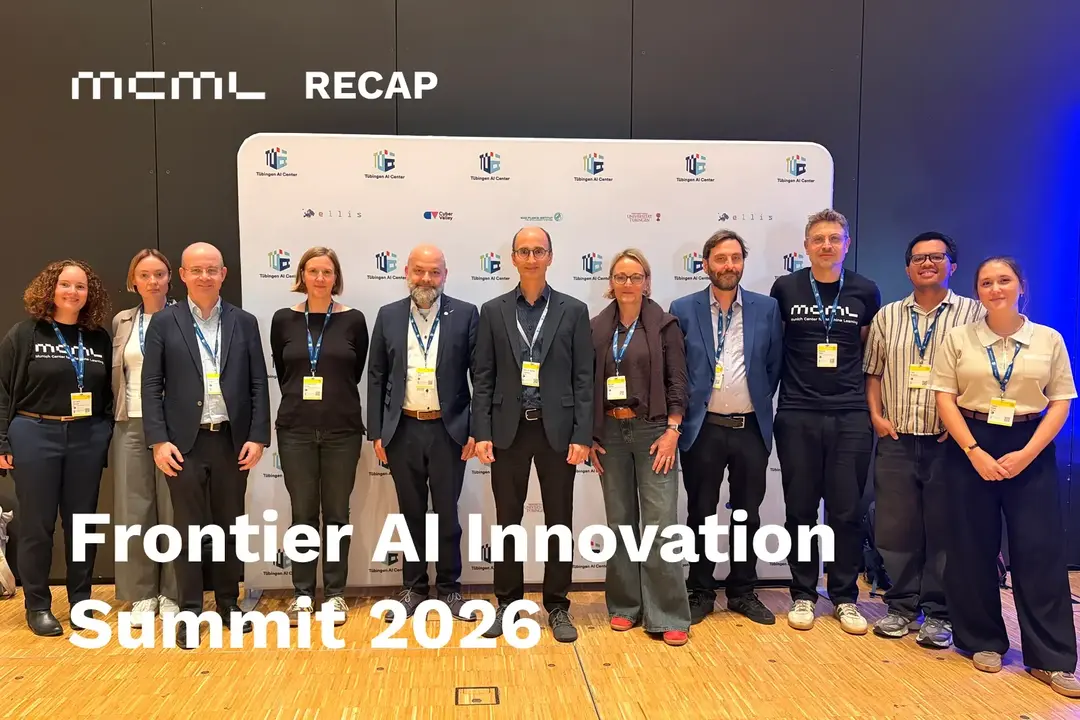
MCML at the Frontier AI Innovation Summit 2026 in Stuttgart
MCML joined the German AI Centers and the ELIAS Alliance at the Frontier AI Innovation Summit in Stuttgart on October 7–8.
07.10.2026
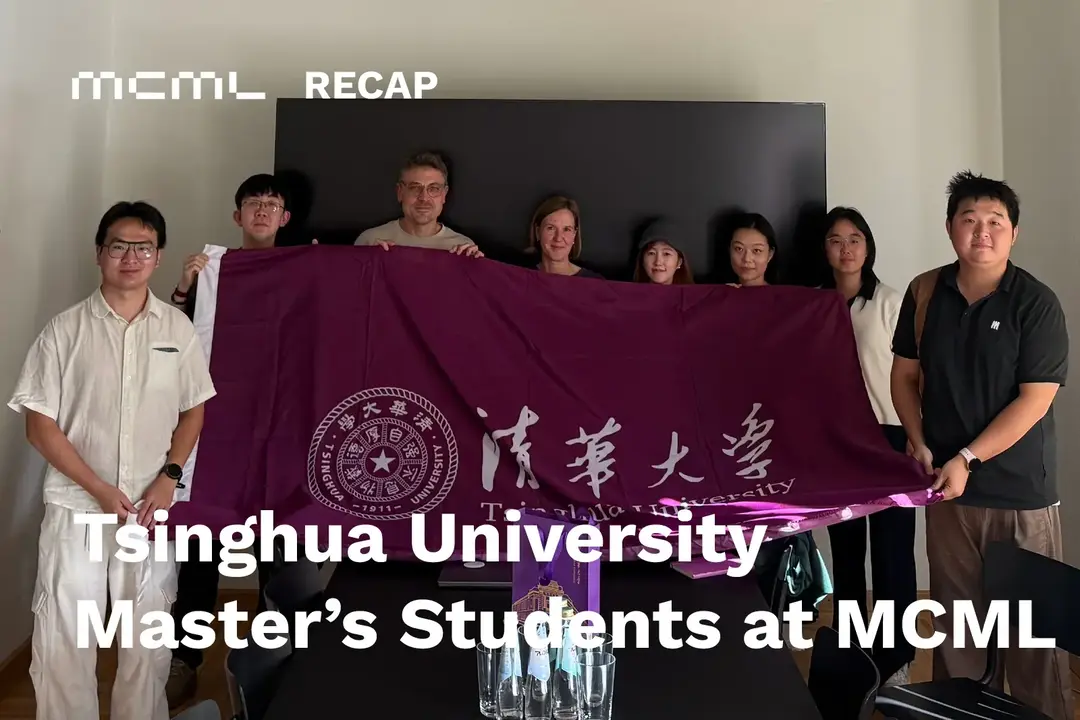
MCML Welcomes Master's Students From Tsinghua University
MCML welcomes Tsinghua University master’s students for an exchange on AI research, large language models, generative AI, and robotics.