28.05.2026
Germany’s AI Strategy: Powering Up the National Network
How a National Network Is Shaping the Country's New Tech Roadmap and Global Position
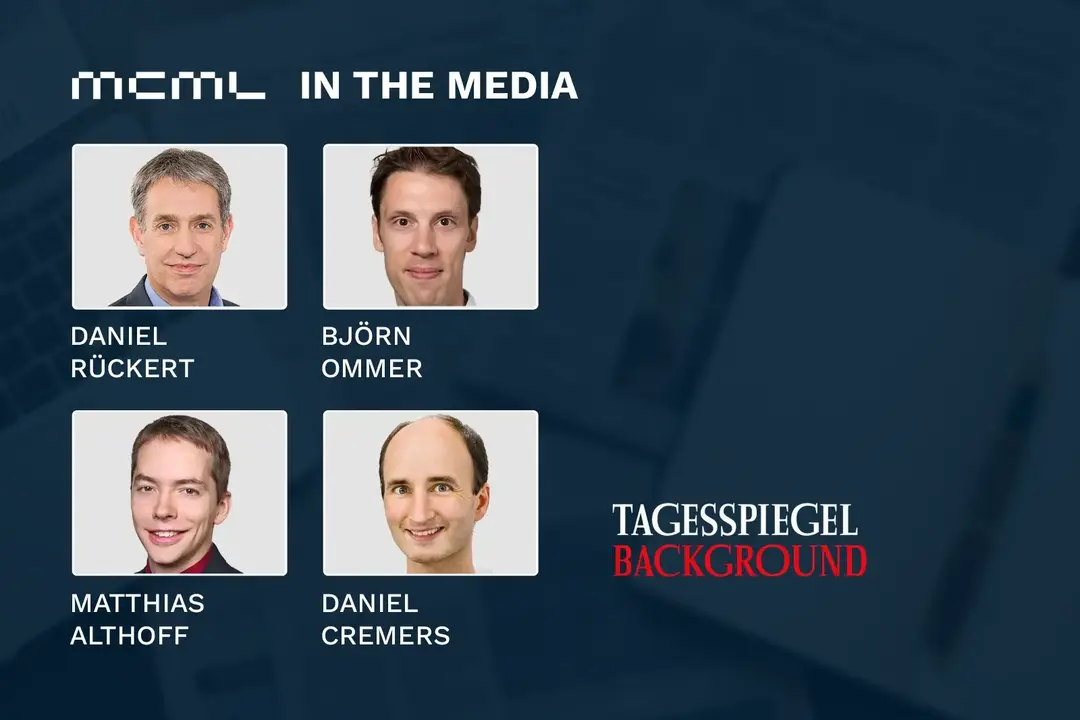
In a recent article in Tagesspiegel Background, journalists Manfred Ronzheimer and Oliver Voß discuss Germany’s AI strategy. In their view, while a comprehensive national AI strategy is still pending, the upcoming AI roadmap as part of the High-Tech Agenda represents an important intermediate step. In this context, they summarize the development and performance of Germany’s network of AI competence centers.
The article then turns to Germany’s network of AI competence centers and examines their individual profiles and research strengths. The Berlin center is noted for the Leibniz Prize awarded to Klaus-Robert Müller and for its strong focus on education and teaching activities.
The MCML is described as a large research network with extensive publication output and recognized contributions from its researchers, including awards such as the Leibniz Prize for MCML Director Daniel Rückert and the German AI Prize for MCML PI Björn Ommer, as well as spin-off activities such as Sitegeist Robotics, co-founded by MCML PI Matthias Althoff, and SE3Labs, founded by MCML Director Daniel Cremers.
The Dortmund center (Lamarr Institute) is referenced for the development of the Teuken language model and contributions to telescope-related data analysis.
The Dresden/Leipzig center (ScaDS.AI) is described with a focus on neuromorphic computing systems and research on energy-efficient AI hardware.
The Tübingen AI Center (TUE.AI) is included among the national competence centers, while the German Research Center for Artificial Intelligence (DFKI) is highlighted for its achievements in RoboCup competitions and contributions to space-related AI challenges.
According to the Federal Ministry of Research, Technology and Space (BMFTR), the strength of this network lies in its “strategic cohesion.” At the same time, the article reports that experts call for further development of regional AI hubs to strengthen Germany’s position in the global AI landscape.
Related
12.10.2026
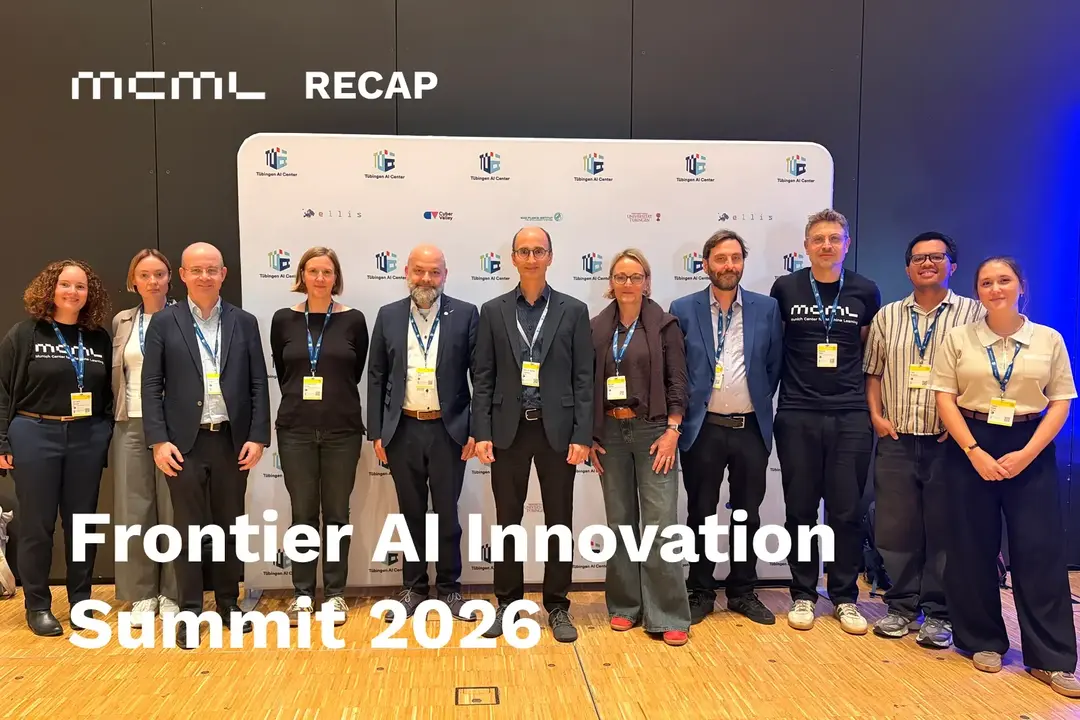
MCML at the Frontier AI Innovation Summit 2026 in Stuttgart
MCML joined the German AI Centers and the ELIAS Alliance at the Frontier AI Innovation Summit in Stuttgart on October 7–8.
28.09.2026
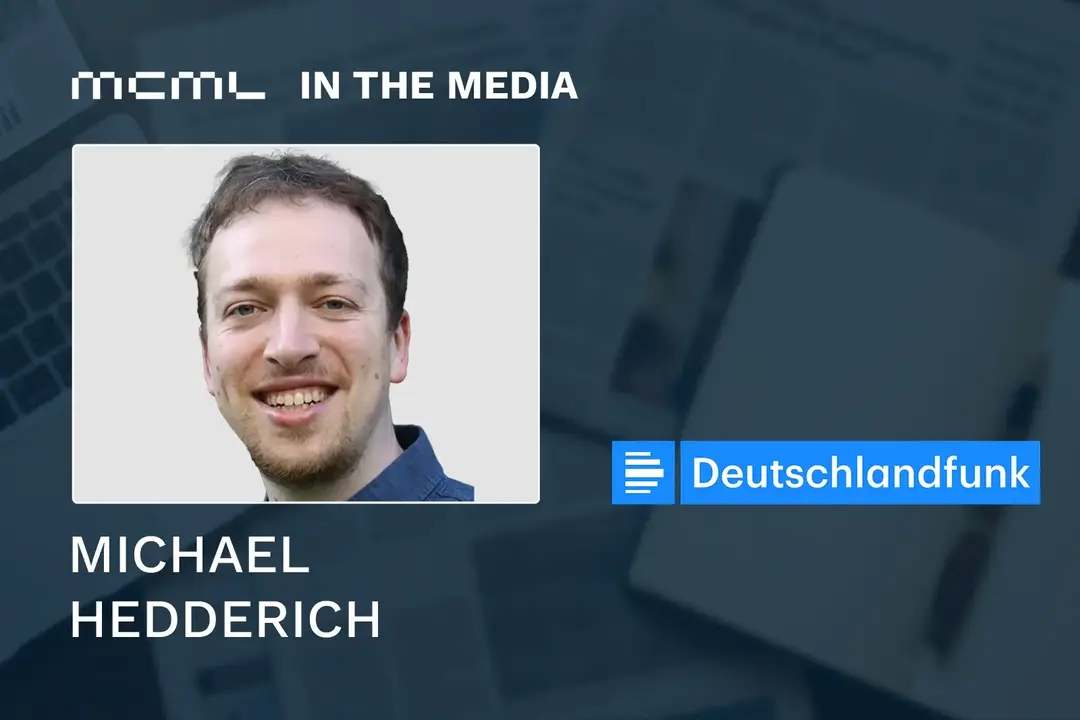
Michael Hedderich Featured in Deutschlandfunk on Small Language Models
MCML PI Michael Hedderich is featured in Deutschlandfunk on the technology, potential, and growing relevance of small language models.

22.09.2026
Björn Ommer Featured on n-tv
MCML PI Björn Ommer spoke to n-tv about the debate on superintelligent AI and why human misuse is the most tangible risk today.