Home  | News

04.06.2025

Tiny logo
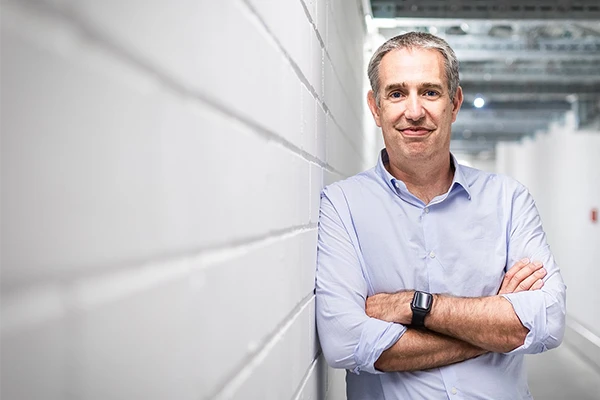
Teaser image to Daniel Rückert elected Fellow of the Royal Society

Daniel Rückert Elected Fellow of the Royal Society

Over 90 Scientists Elected as Royal Society Fellows in 2025

MCML Director Daniel Rückert has been elected to the Fellowship of the Royal Society, UK’s national academy of sciences, in recognition of his contributions to artificial intelligence in medicine and healthcare.

The Fellowship is awarded to individuals who have significantly advanced knowledge in their field.

The Fellows join the ranks of Stephen Hawking, Isaac Newton, Charles Darwin, Albert Einstein, Lise Meitner, Subrahmanyan Chandrasekhar and Dorothy Hodgkin.

Congrats from us!

#award #research #rueckert
Subscribe to RSS News feed

Related

Link to Blind Matching – Aligning Images and Text Without Training or Labels

15.01.2026

Blind Matching – Aligning Images and Text Without Training or Labels

CVPR 2025 research from Daniel Cremers’ group shows how images and text can be aligned without training data, labels, or paired examples.

Link to High-Res Images, Less Wait: A Simple Flow for Image Generation

08.01.2026

High-Res Images, Less Wait: A Simple Flow for Image Generation

ECCV 2024 research led by Björn Ommer’s team enables faster high-resolution image generation by boosting diffusion models with flow matching.

Link to

02.01.2026

MCML Researchers in Highly-Ranked Journals

We are excited to announce that MCML researchers have four papers published in highly-ranked journals in 2026.

Link to "See, Don’t Assume": Revealing and Reducing Gender Bias in AI

18.12.2025

"See, Don’t Assume": Revealing and Reducing Gender Bias in AI

ICLR 2025 research led by Zeynep Akata’s team reveals and reduces gender bias in popular vision-language AI models.

Link to Fabian Theis Featured in Handelsblatt on the Future of AI in Precision Medicine

16.12.2025

Fabian Theis Featured in Handelsblatt on the Future of AI in Precision Medicine

MCML PI Fabian Theis discusses AI-driven precision medicine and its growing impact on individualized healthcare and biomedical research.

Back to Top