28.04.2025
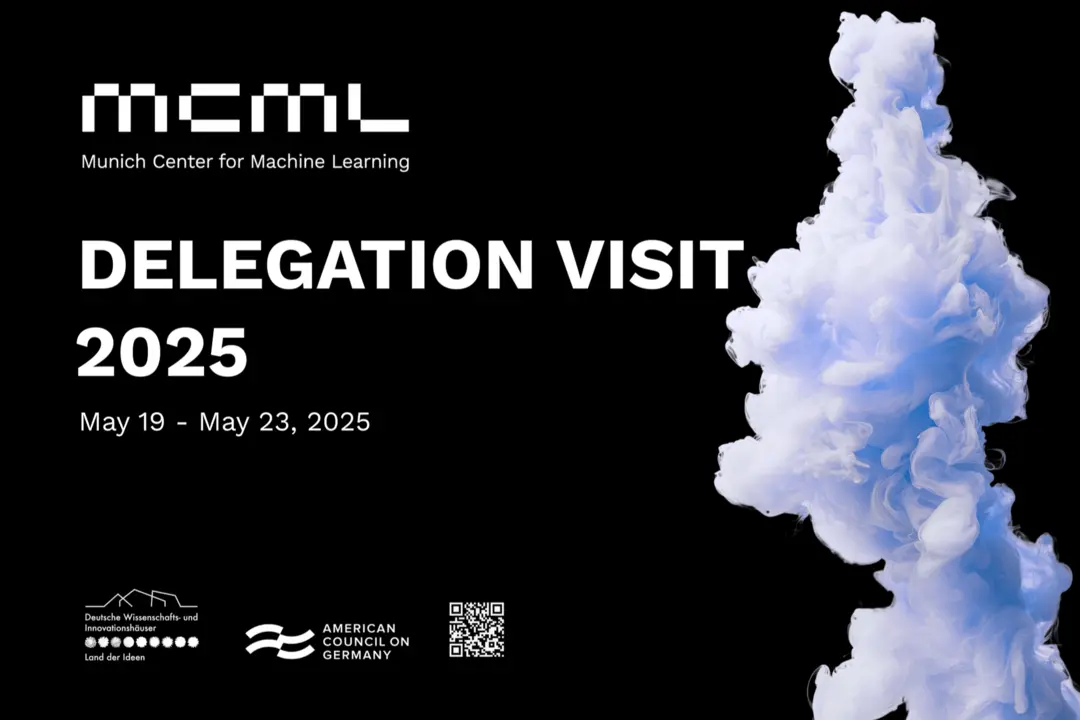
MCML Delegation Visit to the USA
Advancing AI Research Through Transatlantic Cooperation
Generative AI and medical AI are at the forefront of technological innovation, offering transformative potential across sectors. A core delegation of around 15 researchers from MCML will showcase and discuss research in Generative AI and Medical AI, aiming to establish new partnerships and collaborative research initiatives.
From May 19 to 23, 2025, the MCML will embark on a delegation trip to the East Coast of the United States. With visits to leading research institutions, including Harvard University, MIT, NYU, and Cornell Tech, this trip aims to strengthen transatlantic cooperation in the rapidly evolving field of AI.
The delegation trip focuses on two key areas of research: On the one hand, participants will explore the latest advances in Generative AI and Computer Vision. This includes critical discussions on issues such as fairness, transparency, and the societal integration of generative AI systems.
On the other hand, the trip highlights developments in Medical AI and Machine Learning in Healthcare. The focus here is on transformative approaches in medical imaging, diagnostics, and personalized medicine—with an emphasis on real-world clinical impact and the practical implementation of AI technologies in healthcare settings.
The delegation visit is supported by the DWIH New York and the American Council on Germany, both of whom play a key role in strengthening academic and scientific ties between Germany and the United States.
Program
Monday, May 19 | |
10:00 - 13:00 | 📍New York University, NYC Workshop with MCML and NYU researchers |
13:00 - 14:00 | Lunch and Networking at NYU |
18:00 - 20:00 | 📍German House, NYC Reception with keynotes from MCML Director Daniel Rückert and MCML PI Björn Ommer |
Tuesday, May 20 | |
08:00 - 10:00 | 📍American Council on Germany, NYC Research Breakfast and Panel Discussion |
14:00 - 17:00 | 📍Cornell Tech, NYC Workshop at Cornell Tech with MCML and Cornell Tech researchers |
Wednesday, May 21 | |
15:00 - 16:30 | 📍Goethe-Institut Boston Panel Discussion |
16:30 - 18:30 | 📍Goethe-Institut Boston Evening Reception: Networking with representatives from Harvard, MIT, Boston University, Northeastern, and the media |
Thursday, May 22 | |
10:00 - 11:00 | 📍 Massachusetts Institute of Technology (MIT), Boston Flashtalks by MIT and MCML researchers |
13:00 - 14:00 | Networking with Coffee and Cake |
15:00 - 16:00 | 📍 MIT Museum, Boston Tour |
Friday, May 23 | |
09:00 - 13:00 | 📍Harvard University, Boston Workshop on Medicine and AI at Harvard Medical School Workshop on Computer Vision and Mathematical Foundations |
15:00 - 16:00 | 📍IBM Watson, Boston Tour |
Related
24.03.2026
Cybersecurity: “Even Smart Light Bulbs Harbor Risks”
Interview with computer science expert Johannes Kinder on digital security in everyday life.
24.03.2026
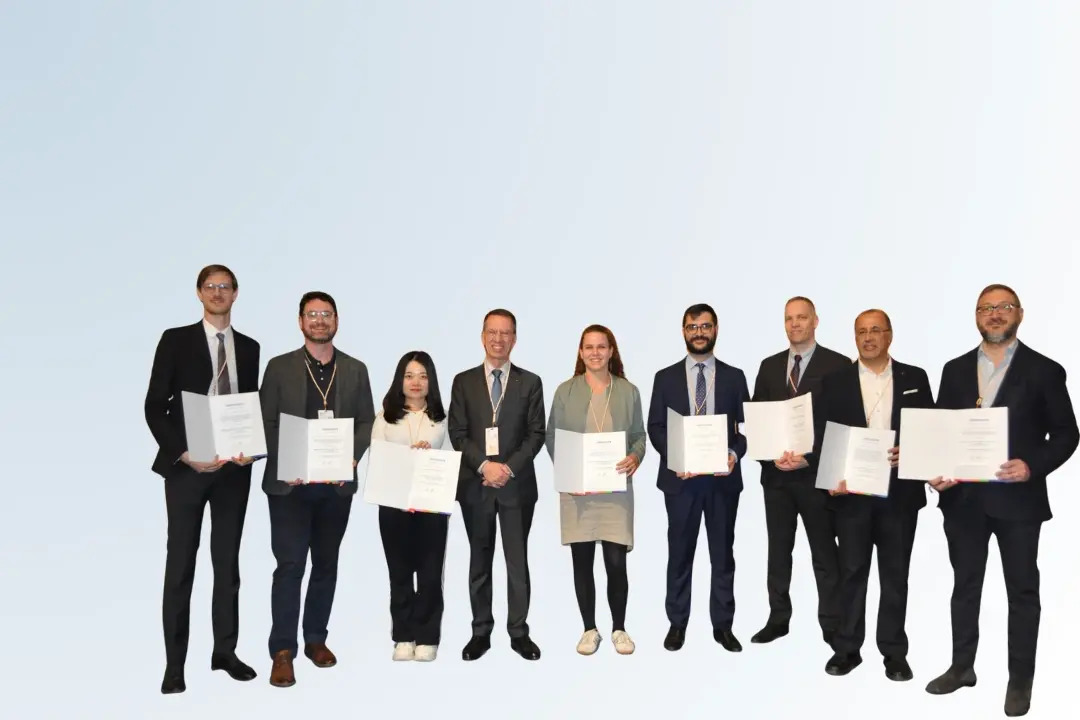
MCML Members Win Most Cited Article Award at ECR 2026
MCML researchers win top citation award for ChatGPT radiology study, highlighting benefits and risks in patient communication.
20.03.2026
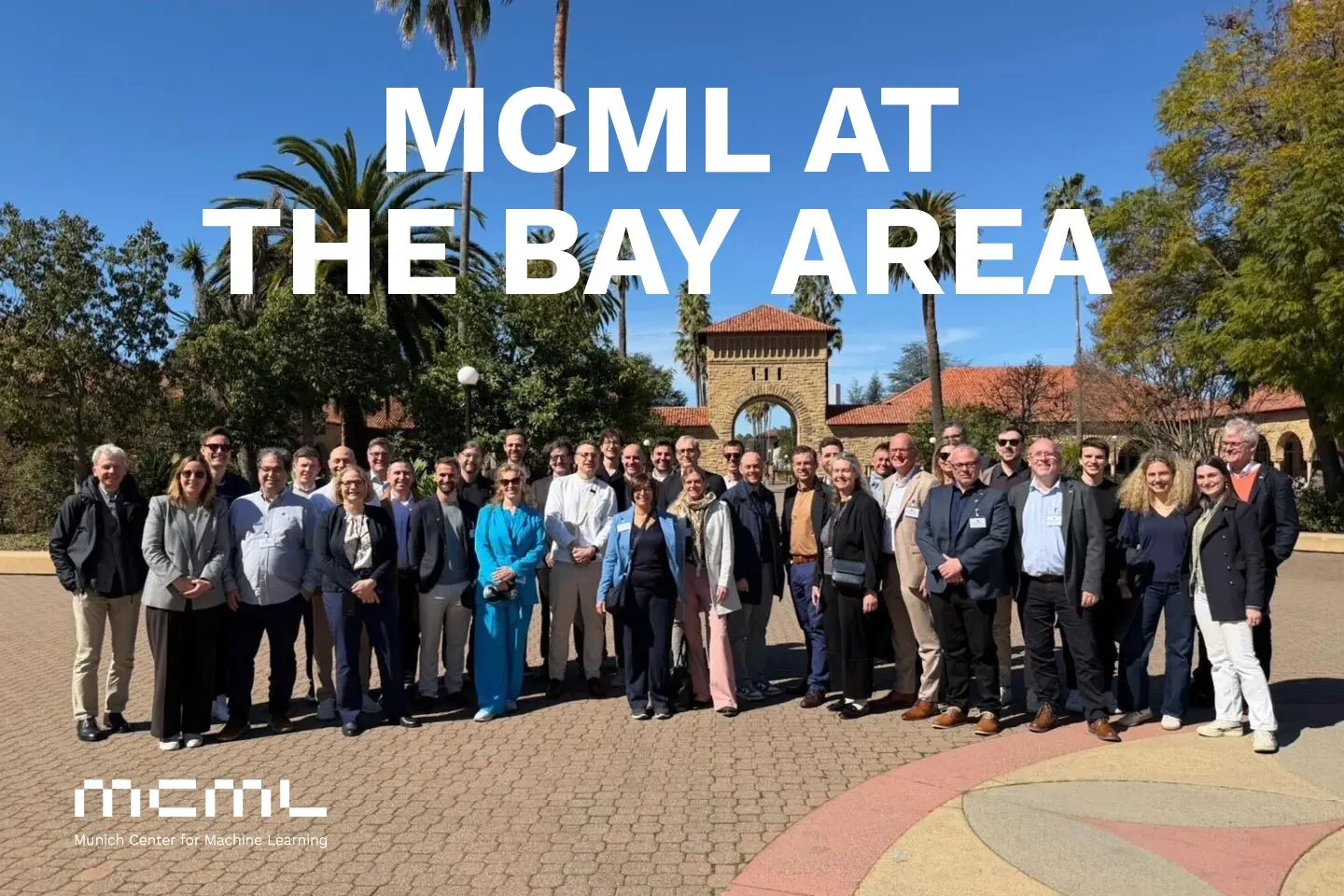
MCML at the Bay Area
MCML joined a Bavarian delegation to the Bay Area, engaging with leading AI organizations to foster collaboration and strengthen global research ties.