04.03.2024
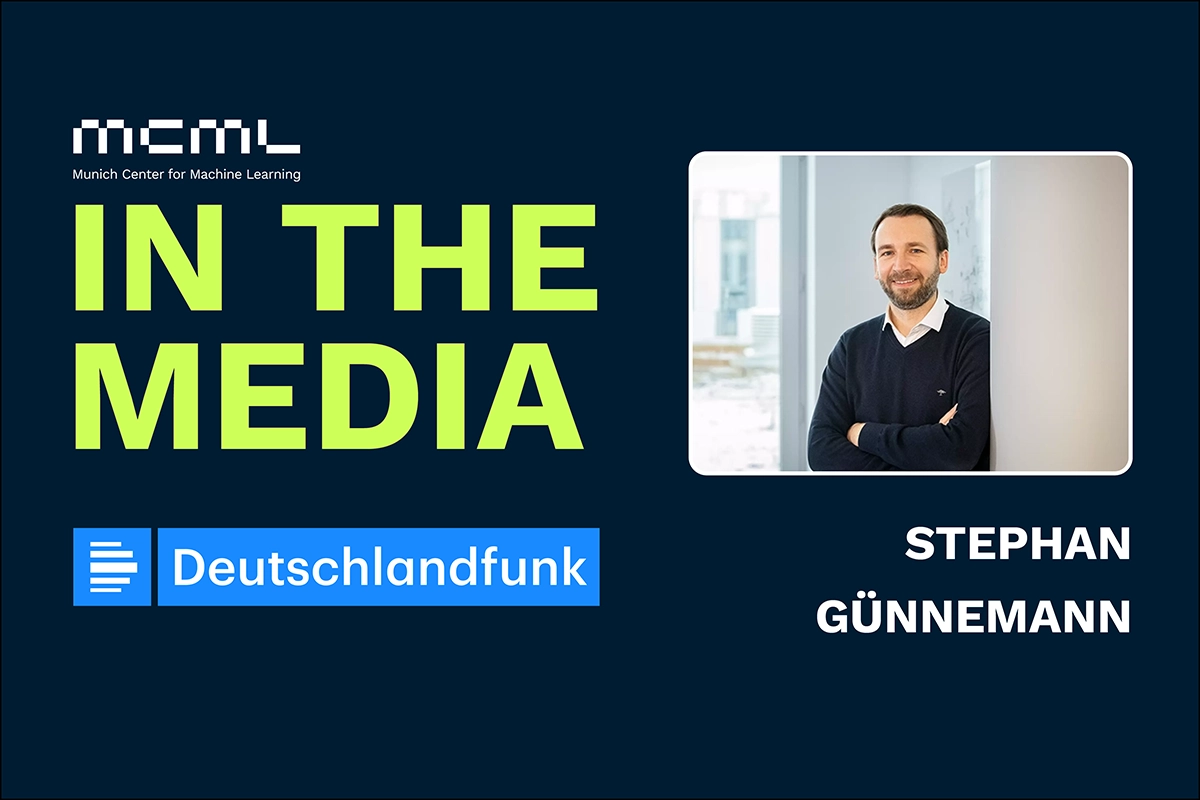
Stephan Günnemann on How AI Can Be Made More Efficient and Sustainable
“Forschung Aktuell”- Broadcast
Our PI Stephan Günnemann was a guest on the science broadcast Forschung aktuell by Deutschlandfunk.
In the feature, he explains pruning and spartification, two techniques that can significantly reduce the computational power required for language models. This makes AI algorithms more effective and, above all, more economical.
Related

05.10.2026
How a Startup Is Making AI Faster and More Sustainable
Pruna AI, co-founded by MCML PI Stephan Günnemann, develops efficient AI models that use fewer resources while keeping high performance.
28.09.2026
Michael Hedderich Featured in Deutschlandfunk on Small Language Models
MCML PI Michael Hedderich is featured in Deutschlandfunk on the technology, potential, and growing relevance of small language models.

22.09.2026
Björn Ommer Featured on n-tv
MCML PI Björn Ommer spoke to n-tv about the debate on superintelligent AI and why human misuse is the most tangible risk today.