17.12.2023

MCML at Wissenschaft Für Jedermann
The Lectures at a Glance
As part of the Deutsches Museum’s “Wissenschaft für Jedermann” series, our Director Daniel Cremers, our researcher Julia Moosbauer and our PI Matthias Nießner gave talks on the topic of AI.
Find below a short summary of the lectures held in German.
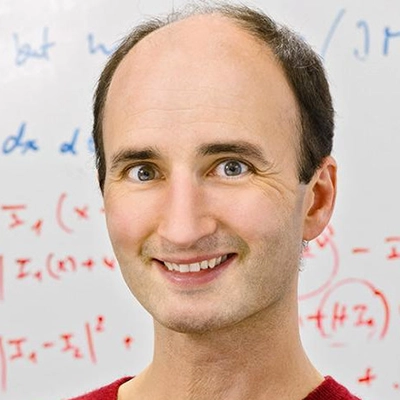
MCML Director Daniel Cremers
The Present and Future of AI
In his presentation, Daniel Cremers focused on the present and future of 3D computer vision in relation to self-driving cars. Starting with the past of AI using the example of chess computers, Cremers explained the basics of machine learning and gave an insight into the current state of research in the field of computer vision. His topics include the success of neural networks and semantic constructions, which make it possible for programs to differentiate between driving and non-driving areas. Daniel Cremers also explained how 3D reconstructions from two-dimensional images are possible and, finally, how previous findings can be used to make the dynamic world comprehensible for AI - and how this is already being done.
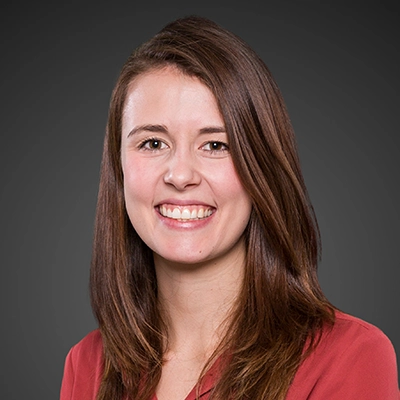
MCML researcher Julia Moosbauer
AI in Medicine
Julia Moosbauer’s presentation focused on artificial intelligence in medicine. After a brief introduction to AI and machine learning, she presented the application of AI in medicine using two examples. The first example she used was from radiology. Here, software is used to analyze radiological images. Doctors who use AI to support diagnostic imaging perform better in percentage terms than those who do not. As a second example, Dr. Moosbauer spoke about applications in Parkinson’s therapy as an example from neurology. AI makes it possible to record data collected using a smart watch easily and clearly over the course of a year and provide patients and the medical staff treating them with an overview of their medication intake, for example.
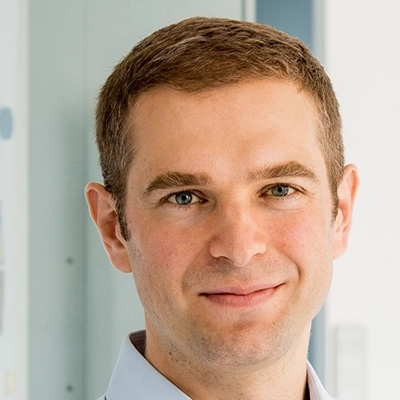
MCML PI Matthias Nießner
Photorealistic 3D Avatars
Matthias Nießner dedicated his presentation to his research in the field of photorealistic 3D avatars. First, he explained the basic features of parametric face models, which are encoded in a neural network. By shifting the parameters, the AI can then animate the 3D models independently. Matthias Nießner then talked about his studies in this area and the methodology of how to get from the collected data to the finished and functional AI avatar. In particular, AI facilitates the conversion of existing image synthesis pipelines.
Related


01.07.2026
MCML at ACL 2026
MCML researchers are represented with 36 papers at ACL 2026 (20 Main, 15 Findings, and 1 Workshop).
30.06.2026
All AI? an Elephant With Three Legs and an Ice Cream Stand With Enough Ice Cream for Everyone
In mid-June, four AI workshops took place at the Eching Municipal Library for all fourth-grade pupils of the primary school on Danziger Straße.
30.06.2026
MCML Junior Members Featured in BR Abendschau
LMU researchers are putting different large language models head-to-head to find out which one delivers the most accurate predictions.