21.07.2026
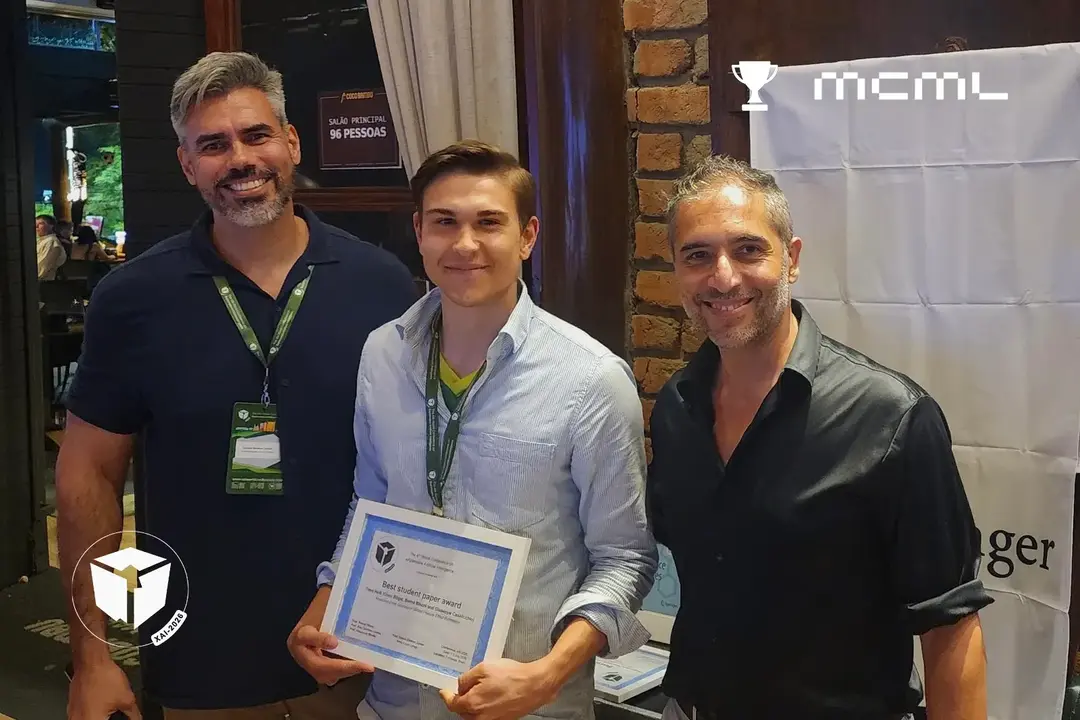
Timo Heiß Receives Best Student Paper Award at XAI 2026
Improving Feature Effect Estimation in Explainable AI
MCML Junior Member Timo Heiß received the Best Student Paper Award at the 4th World Conference on eXplainable Artificial Intelligence (XAI 2026) for the paper Analyzing Error Sources in Global Feature Effect Estimation. Co-authored with Coco Bögel, Bernd Bischl, and Giuseppe Casalicchio, the work was recognized for its outstanding contribution to explainable AI.
The paper provides a systematic analysis of the different sources of error in global feature effect estimation, a key technique for interpreting machine learning models. By decomposing these errors, the researchers address the practical question of whether feature effects should be estimated on training or holdout data, offering guidance that helps make explainable AI methods more reliable and robust.
Related


05.10.2026
Honorable Mention at GCPR 2026
A GCPR 2026 paper co-authored by MCML Director Daniel Cremers received an Honorable Mention at the conference in Siegen.

05.10.2026
Honorable Mention at GCPR 2026
A GCPR 2026 paper co-authored by MCML Director Daniel Cremers and MCML PI Riccardo Marin received an Honorable Mention.