16.09.2026
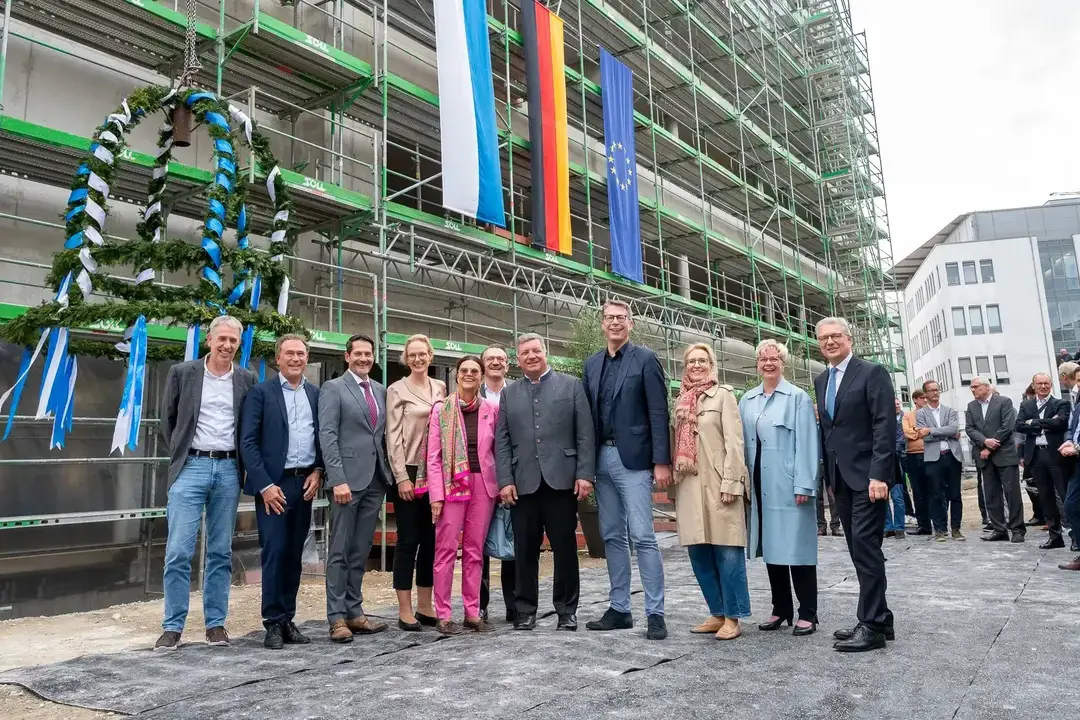
©Kathrin Czoppelt, TUM Klinikum
Center for Digital Medicine and Health Expands
Topping-Out Ceremony Marks Progress on the Construction Project
At the TUM University Hospital Rechts der Isar, the Center for Digital Medicine and Health (ZDGM) is emerging as a new interdisciplinary research hub at the intersection of medicine, computer science, data science, and artificial intelligence. Under the direction of Munich’s State Building Authority 2, the new building is visibly taking shape. An important milestone was reached today with the topping-out ceremony.
The ZDMG is being built as the second construction phase and as a direct extension of the Center for Multiple Sclerosis and Neuroscience. In the future, digital solutions for medicine and health will be developed here and translated into clinical practice. The focus is on combining basic AI research with concrete medical applications—for the benefit of patients.
At the topping-out ceremony, Minister of Science Markus Blume said: “The medicine of the future will be more precise, more personalized, and more intelligent. With the Center for Digital Medicine and Health, we are creating the ideal conditions in Munich to bring together cutting-edge medical research and artificial intelligence — with a clear goal: to turn data into better diagnoses and research into better treatments for people. Precision instead of one-size-fits-all medicine — that’s what will matter in the future. With the ZDMG, we’re bringing the medicine of tomorrow directly to the patient’s bedside.”
TUM President Prof. Thomas F. Hofmann said: “The ZDMG exemplifies TUM’s mission: We combine excellent research, technological innovation, and social responsibility. With this building, we are creating a modern research facility where, through even closer collaboration across disciplinary boundaries, human expertise in medicine is enhanced by data-driven technologies and trustworthy artificial intelligence to better understand diseases, detect them earlier, and treat them individually.”
MCML Director Daniel Rückert, and the Center for Digital Medicine and Health, said: “With the Center for Digital Medicine and Health, we are creating a place where researchers from computer science, mathematics, and medicine work side by side every day. This close interdisciplinary collaboration between TUM and TUM University Hospital is crucial for translating advances in artificial intelligence more quickly into concrete improvements for patients.”
Digital Medicine, AI, and Research Under One Roof
The Center for Digital Medicine and Health at TUM is designed as an interdisciplinary research hub. Its goal is to develop data-driven and AI-supported methods to sustainably improve the diagnosis, treatment, and prevention of diseases.
The research focuses in particular on the clinical fields of cardiovascular medicine, neurology, and oncology. This is based on the processing and analysis of large, heterogeneous medical datasets. These include, among other things, image data from modern medical imaging, genetic and molecular data, clinical follow-up data, and other digital health data.
Machine learning is used to identify patterns, correlations, and new biomarkers that can be harnessed in the future for early detection, personalized diagnostics, and individualized therapies. A particular emphasis is placed on the secure, privacy-preserving, and responsible use of medical data.
The Data Observatory as the Centerpiece of the New Building
A central element of the building is the planned Data Observatory, a visualization studio for big data in medicine. In an immersive and collaborative environment, complex datasets, analysis results, and models will be made accessible through spatial, graphical, and interactive means.
The Data Observatory serves both to generate scientific insights and to communicate research findings. It makes digital research visible and fosters exchange between medicine, computer science, data science, and artificial intelligence.
With the ZDMG, a research building is being constructed at TUM University Hospital Rechts der Isar to help shape the digital medicine of tomorrow and further strengthen the connection between cutting-edge research, clinical application, and technological development.
Related

05.10.2026
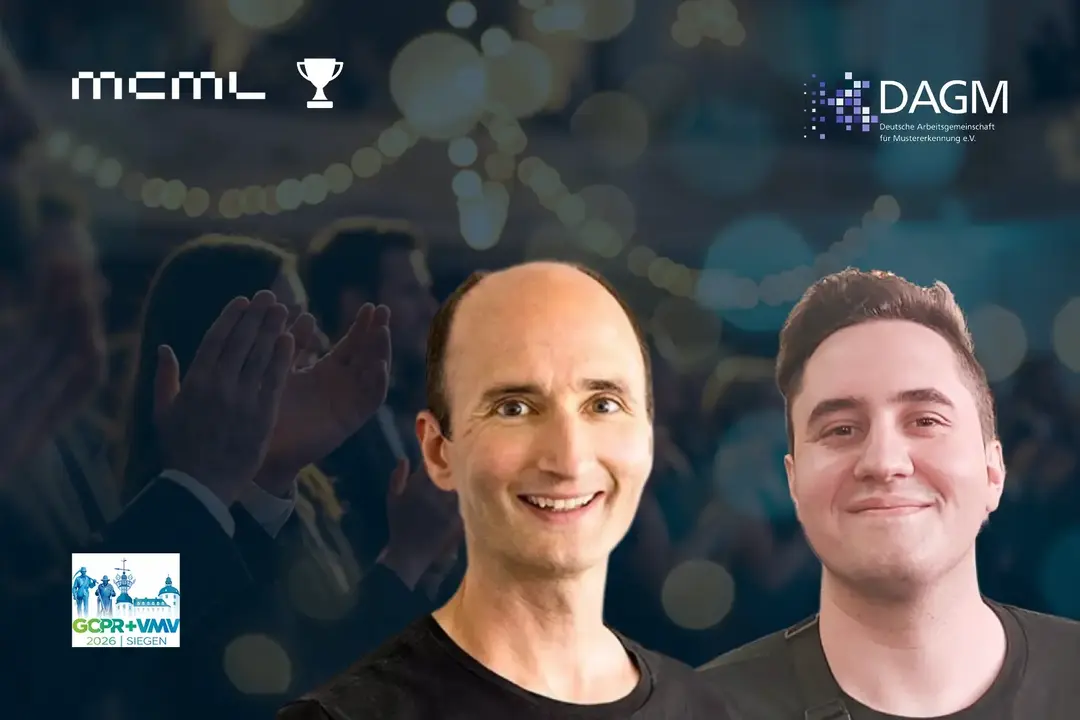
Honorable Mention at GCPR 2026
A GCPR 2026 paper co-authored by MCML Director Daniel Cremers received an Honorable Mention at the conference in Siegen.
05.10.2026
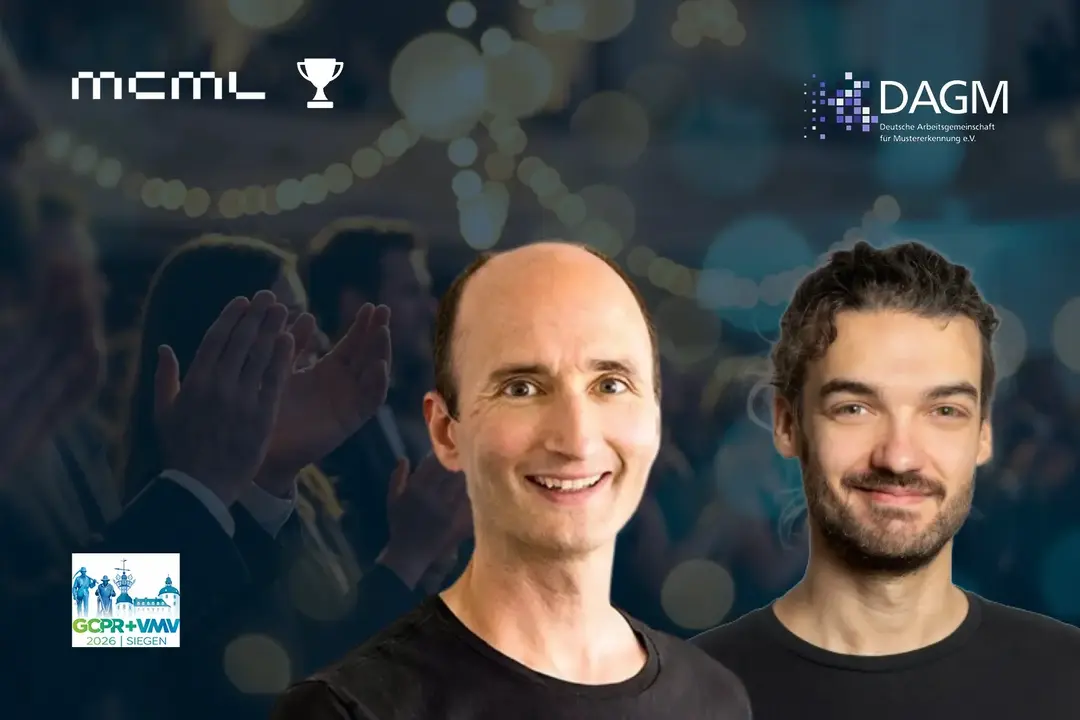
Honorable Mention at GCPR 2026
A GCPR 2026 paper co-authored by MCML Director Daniel Cremers and MCML PI Riccardo Marin received an Honorable Mention.