01.04.2025
DataFest Germany 2025
A Weekend of Data at LMU Munich
From March 28–30, LMU Munich hosted DataFest Germany 2025, bringing together 24 student teams from 15 universities for an intense 48-hour data challenge. Participants worked with a newly developed dataset on German municipalities, tackling real-world questions through data analysis and storytelling.
The dataset — created by Andreas Dimmelmeier and Felicitas Sommer — is the first in DataFest history to be publicly available, thanks to BERD@NFDI:
It combines land use and housing indicators (e.g. built-up area, density, housing types, flat sizes) with social, economic, and demographic variables.
This Year’s Award Winners:
- Best Visualization – The Counterfactuals 2.0 (Hertie School): Linking migration, land use, and environmental inequality
- Best Use of Outside Data – Mind & Molecules (LMU): Urban bird diversity and green space
- Data Quality Award – KODAQS D: Missing data as a lens into systemic issues
- Best Insight – MREOW (TUM & LMU): From city policy to apartment choices – what makes a place attractive?
The event was organized by MCML PI Frauke Kreuter and her team at the SODA Lab and proudly sponsored by MCML.
Thanks to all participants for their great work!
Related
09.10.2026
Digdeep Podcast: Human Friendly Automation – Does AI Work for Humans, or Are We Out in the End?
In this episode of #digdeep, Hanjo Gergs and Lars Schatilow present the ideas of the Human Friendly Automation Alliance.

07.10.2026
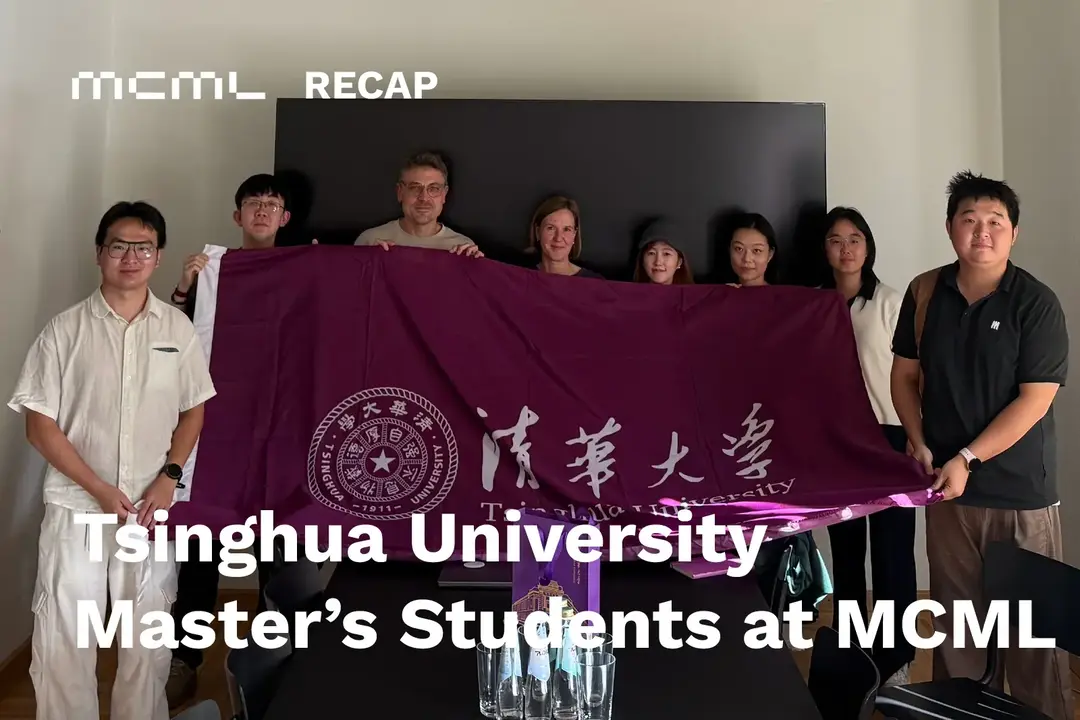
MCML Welcomes Master's Students From Tsinghua University
MCML welcomes Tsinghua University master’s students for an exchange on AI research, large language models, generative AI, and robotics.