26.08.2026
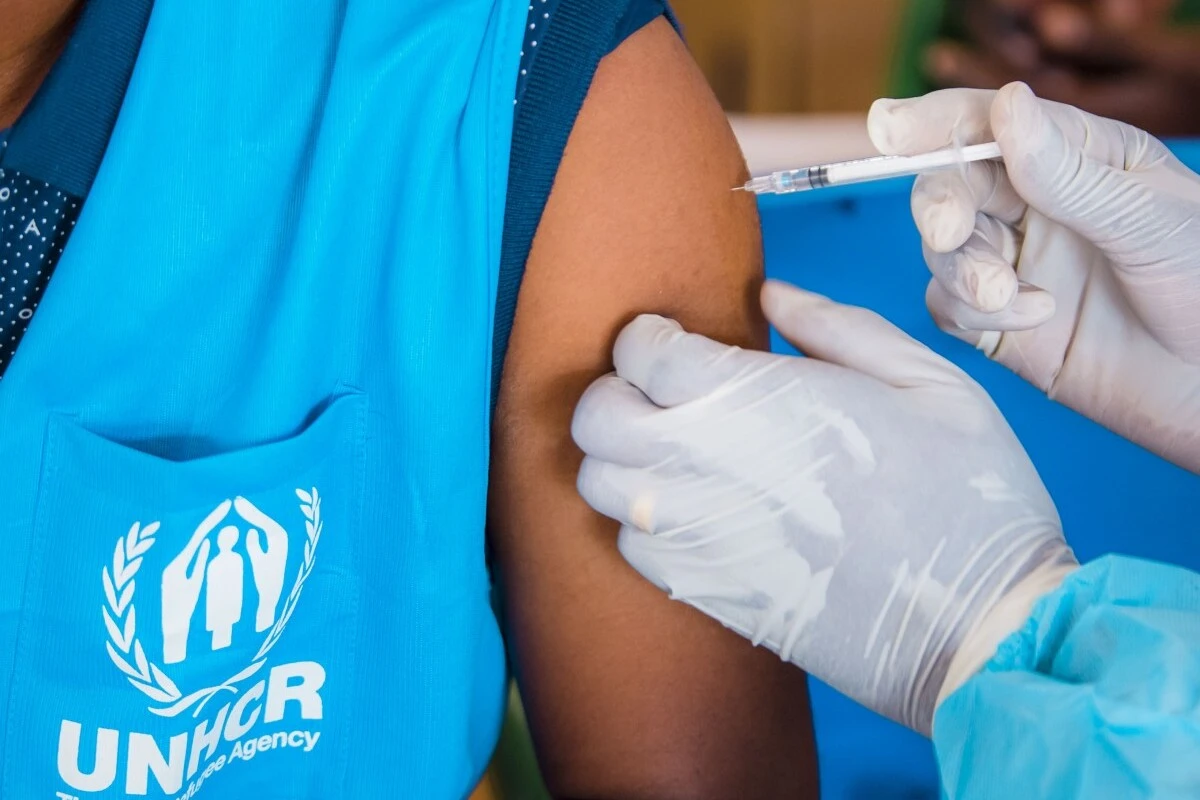
©alliance / AA | Habimana Thierry
Transparency for Global Health Aid
Using AI to Reveal Funding Disparities
To what extent does the allocation of aid for combating disease correspond to disease burden? LMU researchers have developed a machine learning pipeline that helps uncover relative discrepancies in aid distribution.
Certainly, aid spending is far from trifling. But global health needs are great and the situation is nothing short of dramatic. Measured by the UN Sustainable Development Goals, global health is not on a good course. This applies especially to low- and middle-income countries, where massively underfunded health systems come up against high disease burdens, as the jargon has it. The number of new HIV infections is well above target, the number of malaria cases has risen, and progress in reducing the tuberculosis mortality rate is lagging far behind the set goals. Furthermore, recent cuts to health aid – in particular by large donors such as the United States – are further widening the gap between demand and resources.

©Tobias Hase
Doctoral student Kerstin Forster is one of the study's lead authors.
But does the allocation of aid correspond to disease burden? Which countries receive how much? And to combat which diseases? An LMU team has developed a so-called machine learning pipeline, that compares disease-specific aid funding at the country and disease levels against the respective disease burden. With their multi-stage approach, the researchers led by MCML PI Stefan Feuerriegel, Director of the Institute for AI in Management, are able to track relative discrepancies in the global allocation of aid money.
“Global Perspective Combined With High Granularity”
«What makes our study different is its global perspective combined with its high granularity. It unlocks a large treasure trove of data for comparative analysis of individual countries and diseases.»
Kerstin Forster
MCML Junior Member
Even though there is “a significant correlation between funding and disease burden” for many diseases, there are nevertheless “notable imbalances,” as the authors report in the prestigious journal Nature Communications. “Our results show that in several regions, including Central Africa and parts of South Asia and West Africa, there are clear relative discrepancies between aid funding and disease burden for various diseases.”
Although earlier analyses had looked at how aid funding is allocated around the world, these studies were based on smaller and less granular datasets, focused exclusively on specific diseases, or examined only certain regions. “What makes our study different is its global perspective combined with its high granularity. It unlocks a large treasure trove of data for comparative analysis of individual countries and diseases,” says doctoral student Kerstin Forster. She and former master’s student Finn Stürenburg are co-first authors of the paper.
Data From 3.7 Million Projects Made Available for Analysis
«Our findings uncover imbalances in allocation and create transparency. They can serve as a reference point for political decisions in the domain of development aid.»
Kerstin Forster
MCML Junior Member
For its AI-based analysis, Feuerriegel’s team was able to access an OECD dataset recording some 3.7 million development aid projects from 2000 to 2022. Around 320,000 of these projects were classified as relating to one of the 17 major disease categories, with a total volume of 332 billion US dollars.
One imbalance jumped out at the researchers: Non-communicable diseases made up around 60 percent of the global disease burden, but received only 2.5 percent of the disease-specific aid funding investigated. As a result, only 0.2 percent of total aid was spent on each of cardiovascular diseases and diabetes and kidney diseases. This discrepancy is “particularly concerning,” as the burden from non-communicable diseases is rising considerably even in low- and middle-income countries.
Contrasting Funding Priorities
In contrast, some diseases received a larger share of aid relative to their share of the global disease burden, even though the COVID-19 pandemic shifted these priorities. Approximately 34 percent of aid went to the fight against HIV and other sexually transmitted diseases between 2000 and 2021, even though they made up just 6 percent of the global disease burden. Similar discrepancies were observed for neglected tropical diseases and malaria, and for nutritional deficiencies.
Related

23.10.2026
MCML at EMNLP 2026
MCML researchers are represented with 33 papers at EMNLP 2026 (21 Main, 11 Findings, and 1 Workshop).

15.10.2026
When Flatter Is Not Always Better
In their ICML 2026 paper, MCML researchers show why the flattest regions found during neural network training are not always the best.