23.01.2025
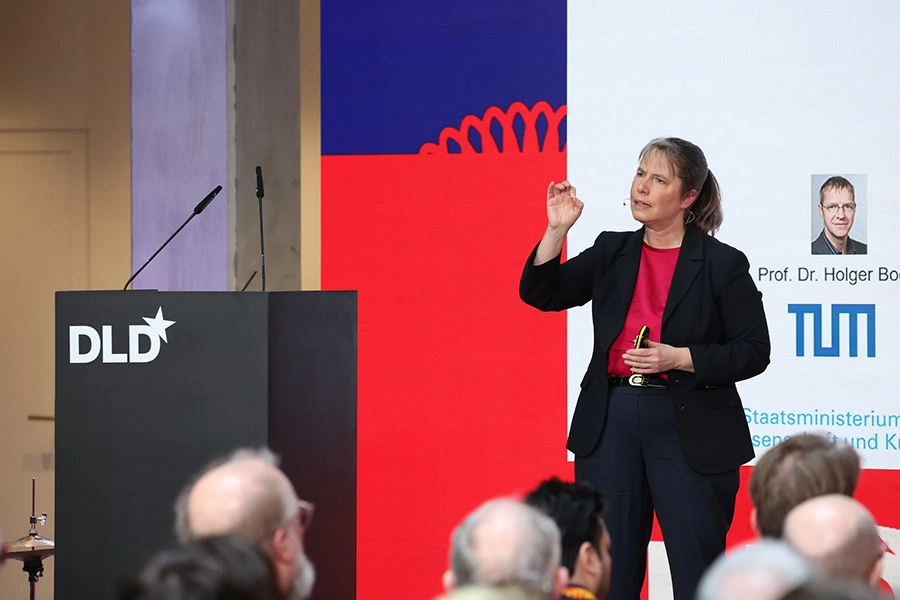
©Karl-Josef Hildenbrand / picture alliance for DLD / Hubert Burda Media
Gitta Kutyniok Speaks at DLD Conference 2025
Next Generation AI Computing
We are proud to share that our PI Gitta Kutyniok was an invited speaker at the prestigious DLD Conference 2025, participating in the BAIOSPHERE track.
In her talk, titled "Next Generation AI Computing", Gitta highlighted the critical role of advanced computing in ensuring the sustainability and reliability of future AI systems. She addressed challenges such as energy consumption, reliability, and compliance with the EU AI Act, while also exploring solutions like analog, neuromorphic, quantum, and biocomputing.
This talk also introduced the GAIn project, a collaborative effort with colleagues from TUM and TU Dresden, aimed at developing energy-efficient and trustworthy AI systems.
Related
12.10.2026
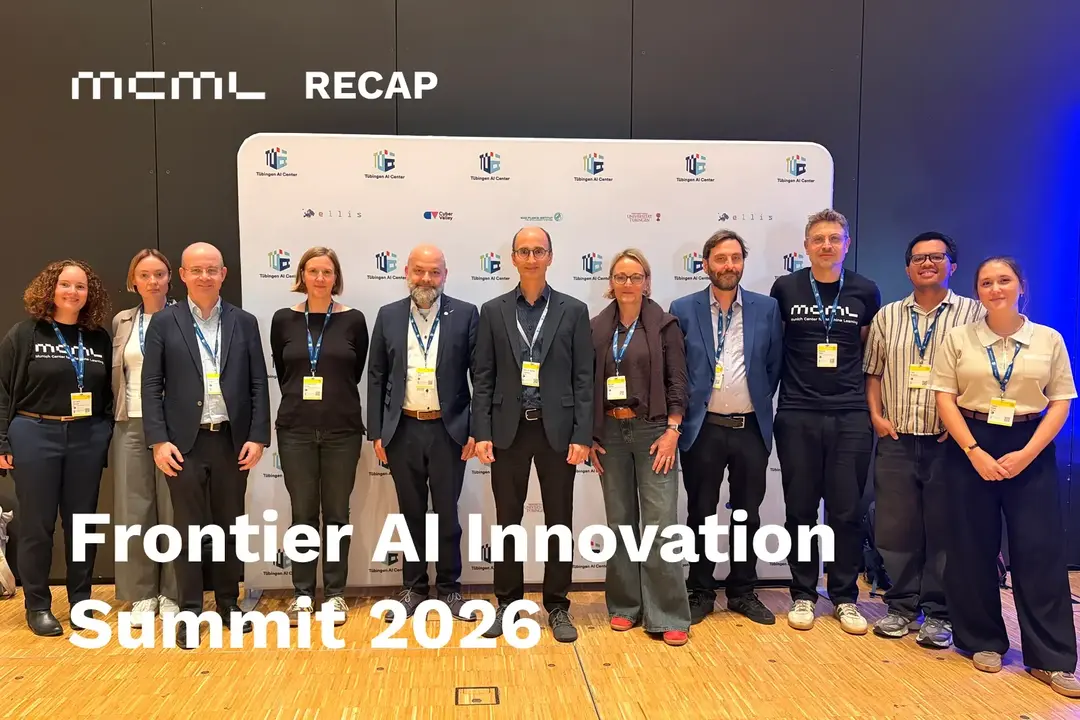
MCML at the Frontier AI Innovation Summit 2026 in Stuttgart
MCML joined the German AI Centers and the ELIAS Alliance at the Frontier AI Innovation Summit in Stuttgart on October 7–8.

08.10.2026
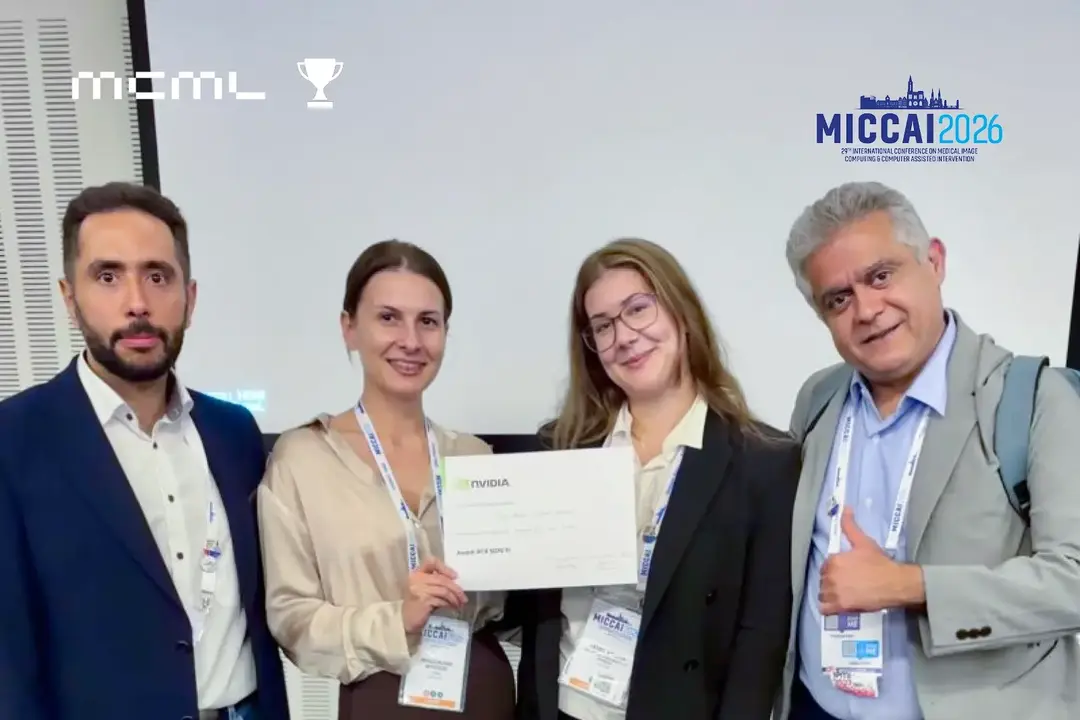
Best Paper Award at ASMUS workshop at MICCAI 2026
Ultra-Wide-NeRF, co-authored by MCML PI Nassir Navab and team, won the Best Paper Award at the ASMUS workshop at MICCAI 2026.