11.11.2026
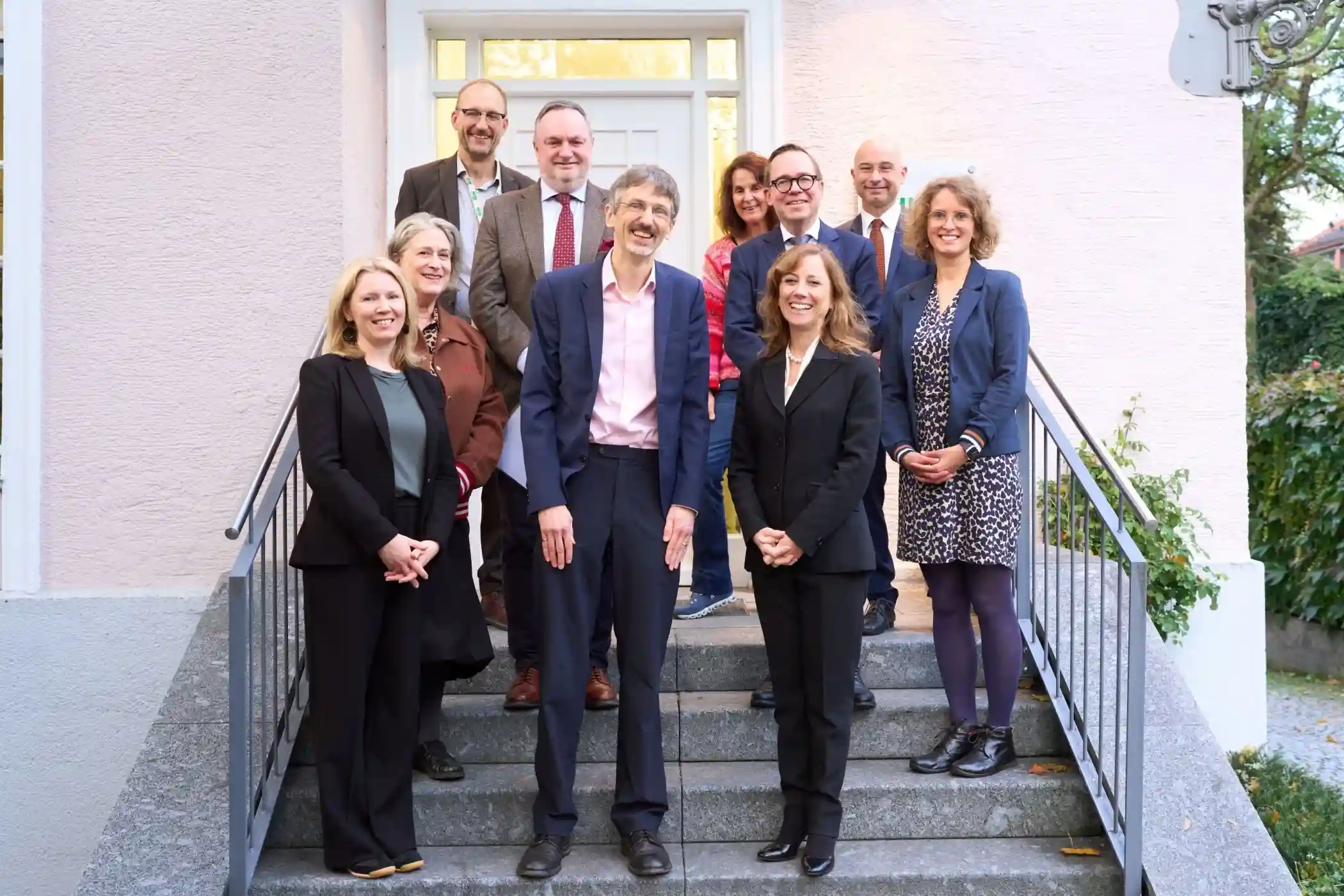
©LMU / Jan Greune
LMU and Cambridge Expand Their Partnership
Strengthening Cooperation in AI, Quantum Science, Nanotechnology and Climate Research
The two universities have been working together closely since 2018. Meeting together over two days in Munich, they set out the course they plan to follow for the next few years.
LMU and the University of Cambridge have been linked together in a strategic partnership since 2018. Academics from the two institutions have worked together to initiate more than 75 joint projects in research and teaching. This collaboration now extends to almost all faculties at LMU and all six schools at the University of Cambridge. For Cambridge, this partnership with LMU is the only university partnership that includes all its schools.
The two universities now want to raise their cooperation to a new level: The intention is that numerous existing and future collaborations between individual research groups will create a much broader academic network that connects researchers across different disciplines and stages of their careers. For this purpose, researchers and members of the steering committees of both universities came together on 26 and 27 October at the Cambridge-LMU Strategic Partnership Days that were held in Munich. Representatives from the worlds of politics, diplomacy and research funding also took part in the detailed discussions.
There are also political reasons why a closer partnership really matters right now. Brexit, the experience of the pandemic and increasing geopolitical tensions have changed the general framework for international scientific collaboration. At the same time, Germany and the United Kingdom have signaled their intention to embrace closer cooperation, including in science and research, with the Kensington Treaty, which was ratified recently at the beginning of October.
«Our partnership with the University of Cambridge connects us with one of the world’s most distinguished universities. It brings together outstanding researchers from both institutions and strengthens LMU’s research profile. The Strategic Partnership Days enhance Bavaria’s international profile as a center of research and strengthen its close ties with the United Kingdom. At a time of geopolitical uncertainty, face-to-face exchanges and robust academic networks are more important than ever.»
Prof. Dr. Francesca Biagini
LMU Vice President for Mathematics, Computer Science, Statistics and International Affairs and patron of the event
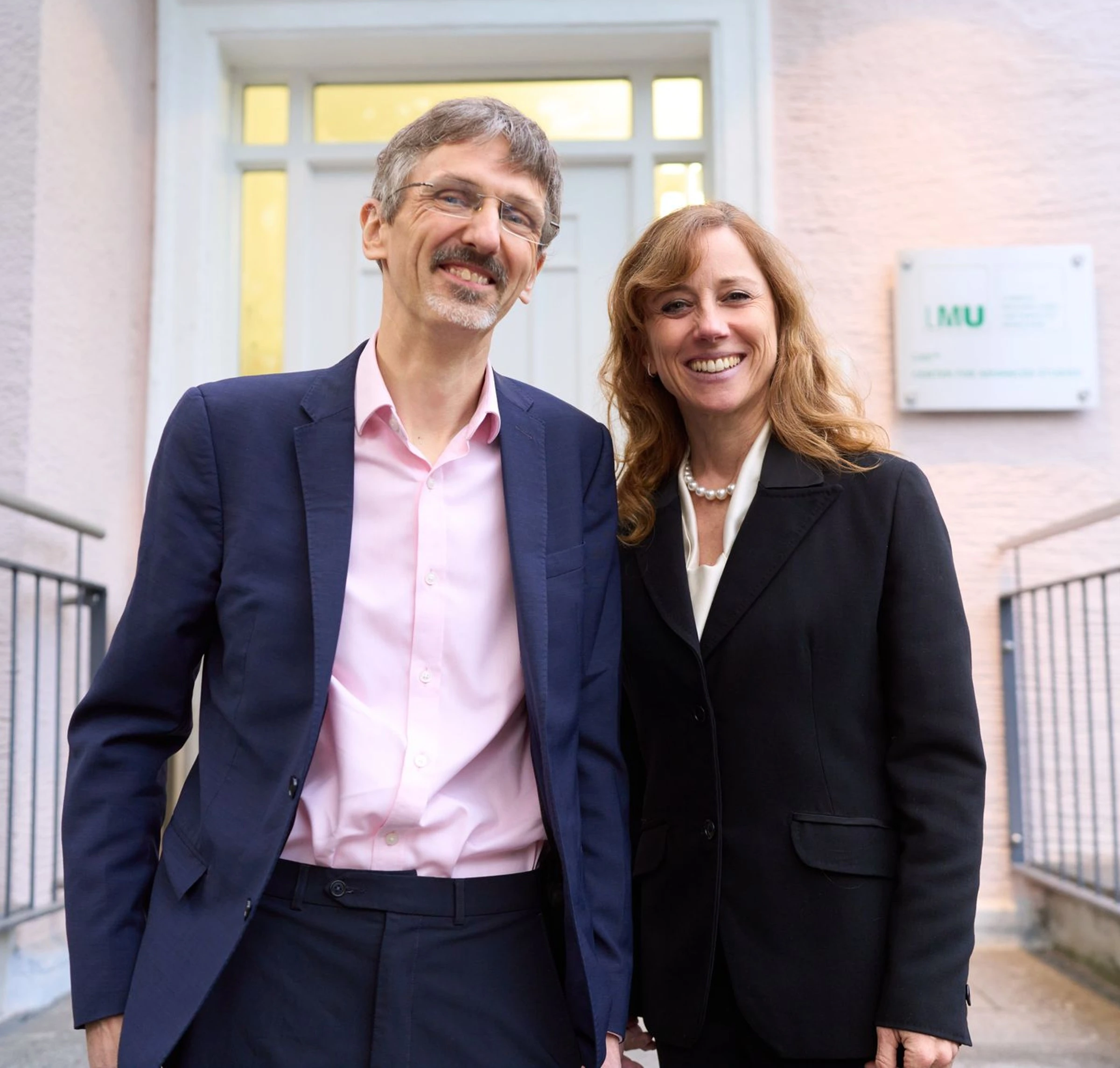
©LMU / Jan Greune
John Aston and Francesca Biagini
«We in Cambridge are delighted to be working with one of Germany’s, indeed one of Europe’s, leading universities. Moreover, the state of Bavaria is a seedbed of innovation in the scientific and cultural realms. We are looking forward to many further years of close collaboration, which will benefit not only both universities but our countries and the world beyond.»
Prof. Sir John Aston
Pro Vice-Chancellor for Research at the University of Cambridge
Strengthening Strategic Cooperation Stemming From Research
The experience that researchers have gained over the last eight years demonstrates the dynamic way in which long-term academic ties between LMU and Cambridge can develop from individual contacts. The first call for funding back in 2019 generated a great level of interest. More than 60 joint applications were submitted, with around two-thirds of them receiving funding. In the first phase of funding through to 2024, the participating researchers also raised several million euros of third-party funding.
Since the partnership was established, it has been overseen by two academic directors: Thomas Ackermann, Professor of Private Law, European and International Commercial Law, and Chris Young, Professor of Modern and Medieval German Studies and Master of St Edmund’s College in Cambridge. Both men have played a key role in helping to shape academic relations between the universities over the years. Young has had an affiliation with LMU for almost a decade, among other things through the Center for Advanced Studies (CAS). In September 2026, he was awarded the Bavarian European Medal in recognition of his commitment to advancing European collaboration.
«Our partnership with LMU Munich has brought a very great deal to researchers across the full range of faculties in Cambridge. Together, colleagues have generated new ideas, secured major grants and enriched one another’s teaching and research environments. We now look forward to deepening and extending this collaboration in the years ahead.»
Prof. Chris Young
Professor of Modern and Medieval German Studies and Master of St Edmund’s College in Cambridge
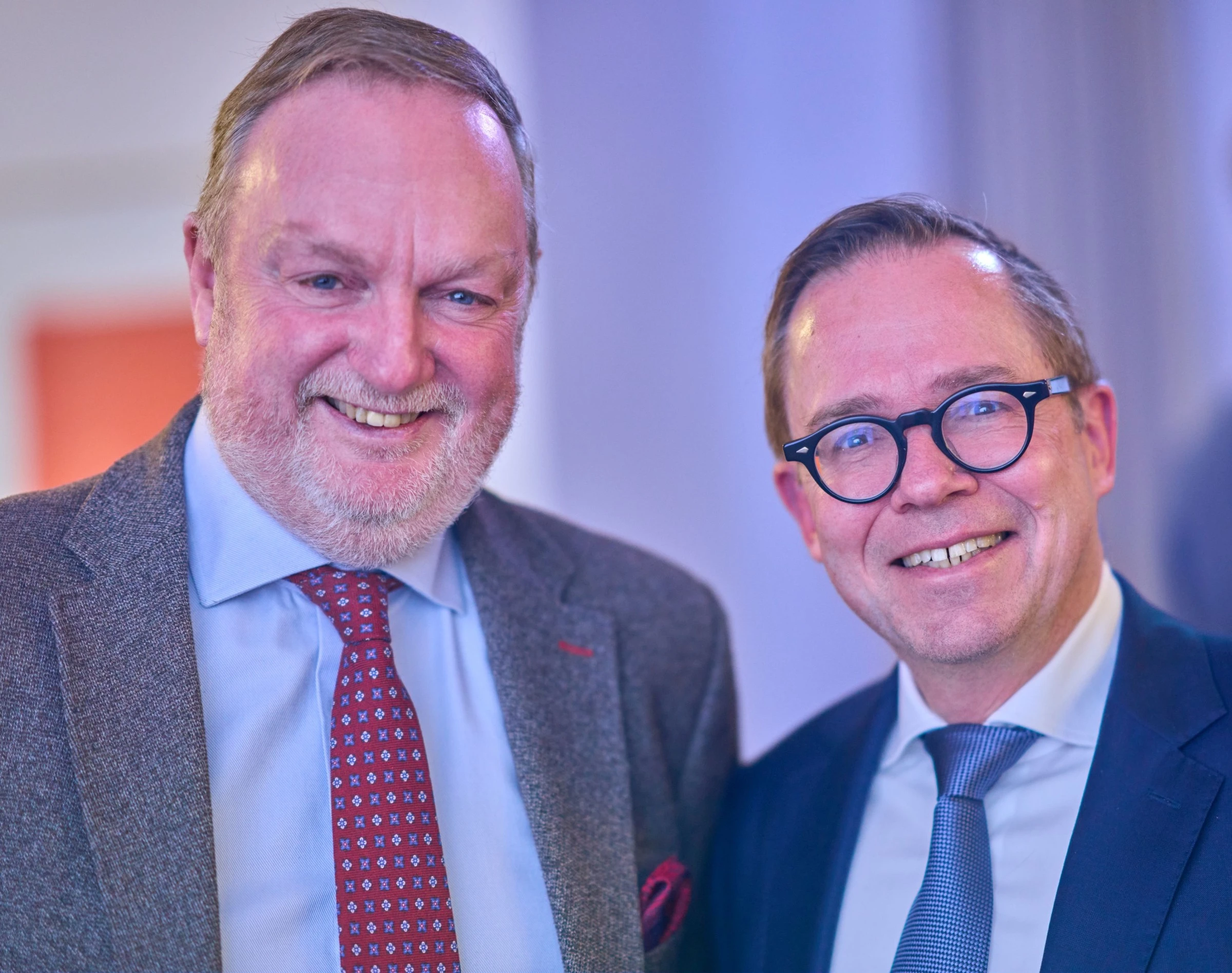
©LMU / Jan Greune
Chris Young (left) und Thomas Ackermann
The Strategic Partnership Days focused on the question of where new connections can be created, with science policy also playing a role. The event brought together representatives from Bavaria and the United Kingdom and provided an opportunity to discuss common research interests, international funding opportunities and the future of German-British academic relations.
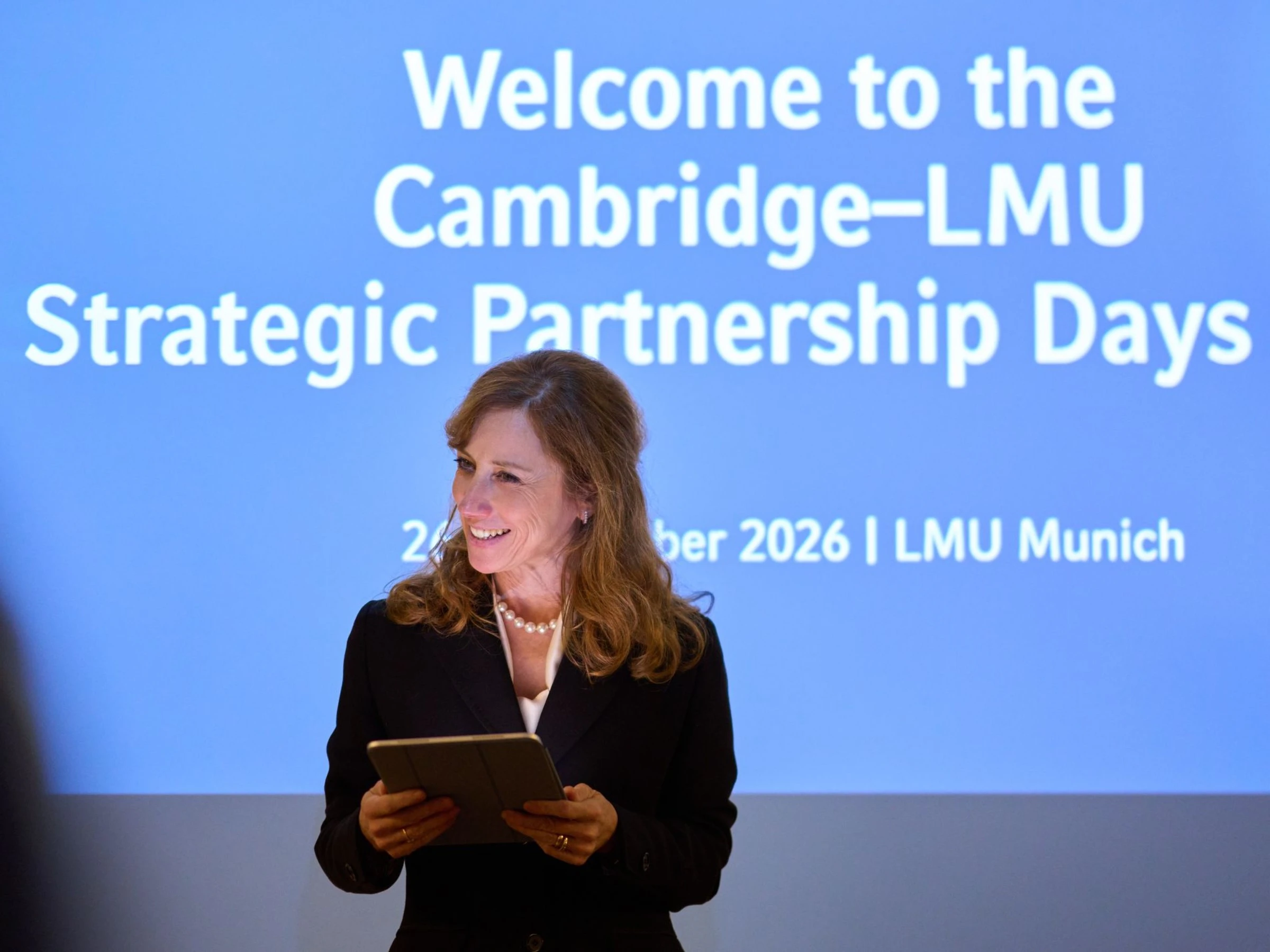
©LMU / Jan Greune
Francesca Biagini
New Ideas for AI, Quantum Science and Climate Research
The great potential for cooperation was clearly demonstrated on the second day of the event. In the Senate Hall, researchers from LMU presented their work in areas of research that are particularly important to both universities: artificial intelligence, nanotechnology, quantum science, and climate and sustainability research. In short keynote speeches, the scientists provided detailed insights into how their specific areas of research are structured at LMU and the areas in which there could be potential links for cooperation.
As Professor Tim Liedl explained in his talk using the DNA4RENOMS ERC Synergy Grant as an example, cooperations like this often emerge from shared interests, a curiosity to explore unusual questions and the sheer joy of academic engagement – including beyond the limits of one’s own expertise. It is crucial to have relationships that are based on trust and an environment that encourages people to think outside the box.
In artificial intelligence, the ties are already close. The Munich Center for Machine Learning (MCML) and the AI Hub “ai@cam” in Cambridge work together closely in exchanging ideas, as MCML Director Thomas Seidl and Thomas Meier from MCML explained to the audience. In April 2026, for example, a delegation from MCML visited the British university to present research approaches and explore opportunities for collaboration. The Strategic Partnership Days were then all about continuing to develop these contacts, establishing a broader institutional basis for cooperation and strengthening the exchange structures. Fundamental topics relating to the challenges presented by artificial intelligence, which Björn Ommer explained in his talk, also offer potential for cooperation.
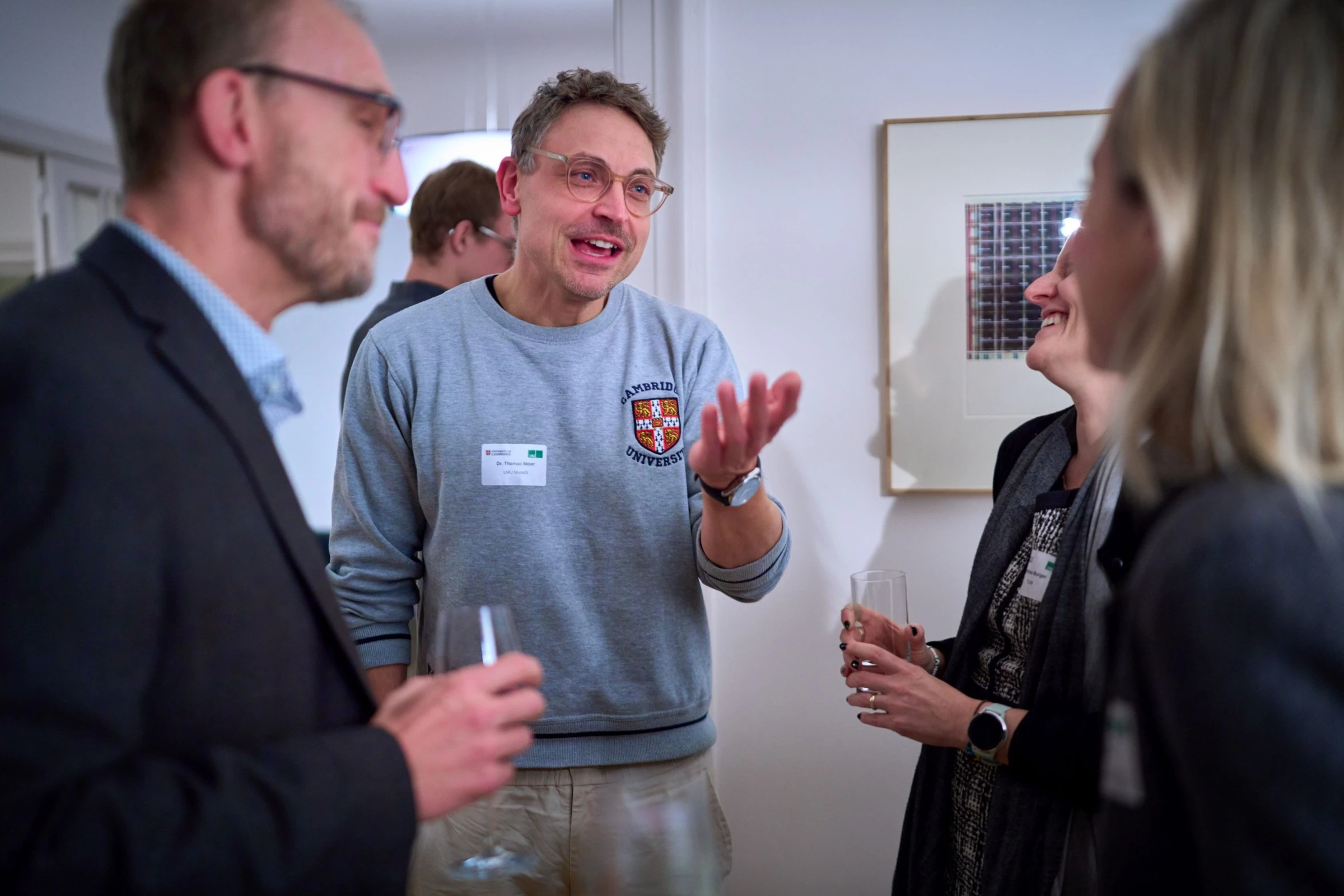
©LMU / Jan Greune
Thomas Meier
Researchers from the two universities are also already working together in quantum science – for example, on novel measurement methods or quantum systems based on neutral atoms. This is where Professor Monika Aidelsburger from the MCQST Cluster of Excellence presented the possibility of quantum simulation with ultracold atoms, which can be used to investigate both real physical systems and new kinds of exotic materials. Systems consisting of two thin carbon single-atom layers, so graphene layers twisted toward each other, also offer huge potential both for investigating fundamental phenomena such as high-temperature superconductivity and for applications as highly sensitive sensors, as Professor Dmitri Efetov outlined. Another example of nanophysics and nanotechnology is the DNA4RENOMS project, which is funded by an ERC Synergy Grant and involves research groups from LMU and the University of Cambridge. Joint successes like this show how academic connections can produce great international research projects.
Another field of study is climate and sustainability research, where in particular the combination of different disciplines is opening up new perspectives. After all, to understand challenges like climate change and develop potential solutions, you need an awareness of social and political contexts alongside scientific knowledge. LMU is able to contribute its broad range of disciplines and work with Cambridge to develop new questions for research.
In this thematic block, Professor Ralf Ludwig and Professor Henrike Rau, among others, presented the LMU Sustainability Office and the Munich Center for Sustainability with their diverse range of activities in the field of sustainability. In addition to conducting research, raising awareness and education also play a key role. Specific examples include the KLICKS project, which is developing LMU’s university forest into a real-world teaching and learning laboratory for sustainable education, or the EU research project CircEUlar exploring the fundamental aspects of a climate-neutral circular economy.
In the talk given by Professor Julia Pongratz, there was more focus on global warming: As climate change continues to advance at pace, it will not be enough simply to reduce CO2 emissions. There will also be an important role for CO2 removal, which is being studied in the CDRTerra joint project, for example. One starting point for cooperation could also be LMU’s Rachel Carson Center, which was presented by Managing Director Lena Engel and whose interdisciplinary approach to the environmental humanities could further stimulate engagement between LMU and Cambridge.
Looking to the Next Generation
The scientific topics discussed at the Strategic Partnership Days also gave rise to a bigger question: How can the cooperation be designed so that it continues to facilitate new ideas and joint research in the future?
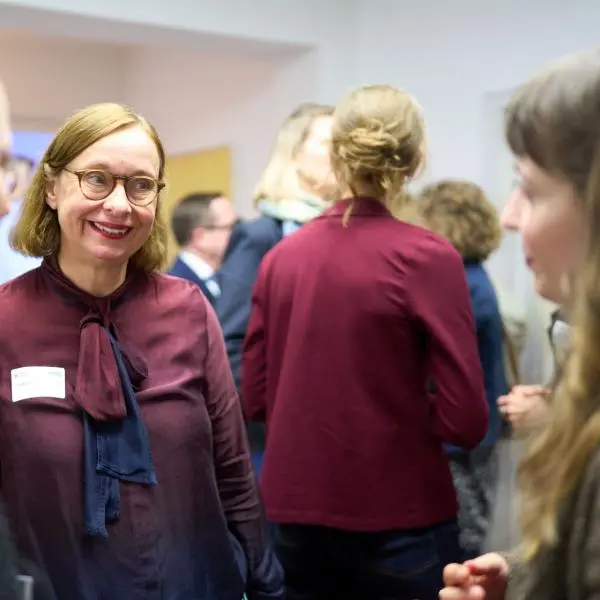
©LMU / Jan Greune
Prof. Dr. Carola Metzner-Nebelsick, LMU-Vice President for Humanities
The next generation of researchers will have an important role to play. In the future, doctoral students and postdocs will get even more benefit from the close links between LMU and Cambridge. International networks will offer them the opportunity to learn about different research perspectives, establish contacts and work together to develop new projects. University of Cambridge Professor Eva Hartmann and Dr. Anna Prisca Lohse, Director of LMU Global, gave a joint presentation examining the German and British higher education systems, current developments in science policy and career paths for young researchers. An additional perspective was provided by Maja Sophie Klimaschewski, Director of the Office of the Free State of Bavaria in the United Kingdom. She explained how institutional interfaces can facilitate collaboration by arranging contacts, providing guidance and supporting cooperation.
It is also important to consider the conditions under which science is conducted internationally today: How can universities work together openly and at the same time consider issues of protecting their research? What are the options for funding joint projects? These questions were addressed in a final panel session in which representatives from LMU and the University of Cambridge, the German Research Foundation (DFG) and the British Council Germany gave their perspectives and recounted their experiences.
A specific opportunity for cooperation is already coming up, with the next joint call for funding for research projects in 2027 and 2028 scheduled to start in November 2026. Researchers from both universities will then once again have the chance to submit joint ideas.
Related
19.11.2026
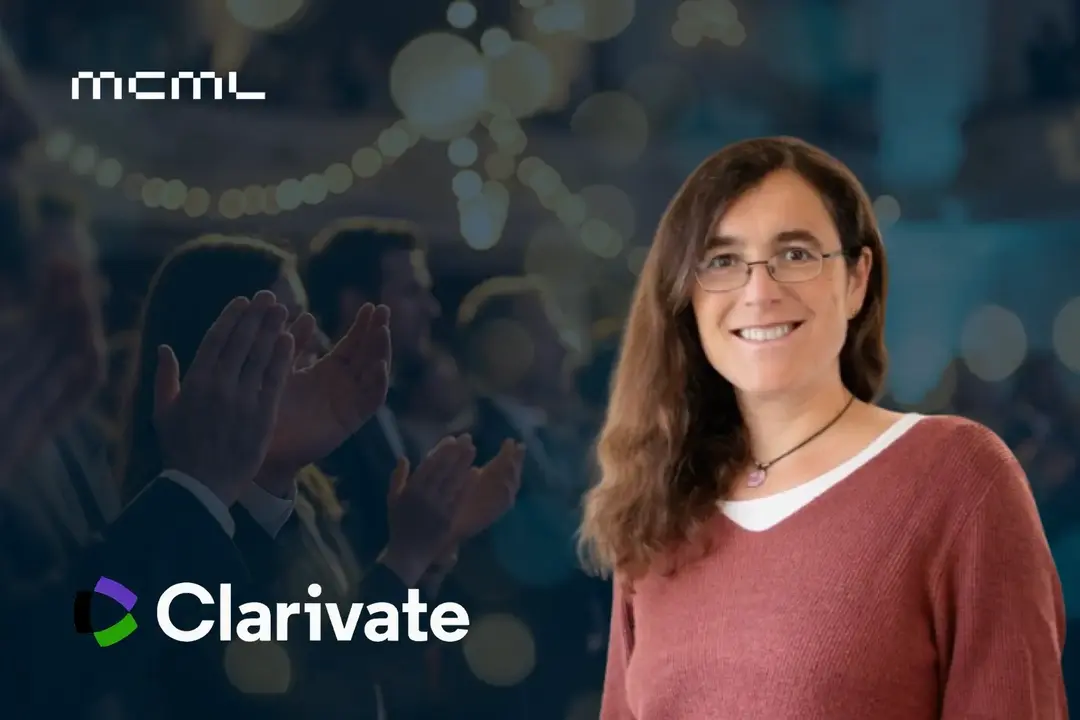
Anne-Laure Boulesteix Named Highly Cited Researcher 2026
MCML PI Anne-Laure Boulesteix has been named a Highly Cited Researcher 2026 by Clarivate.
19.11.2026
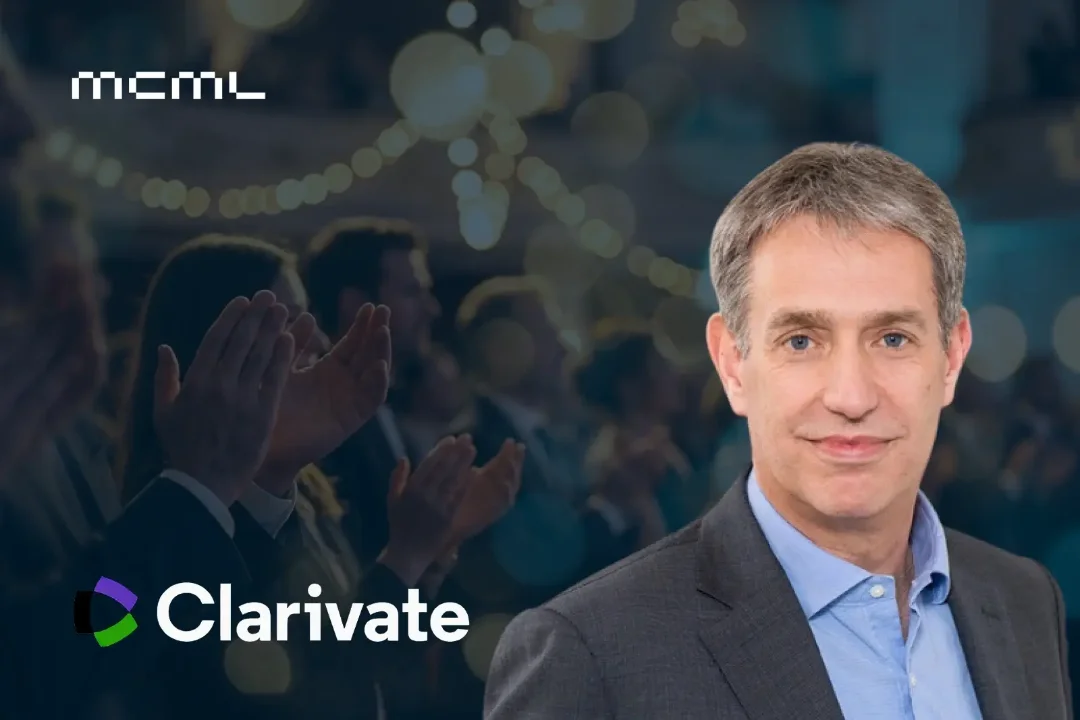
Daniel Rückert Named Highly Cited Researcher 2026
MCML PI Daniel Rückert has been named a Highly Cited Researcher 2026 by Clarivate in the Cross-Field category.
19.11.2026
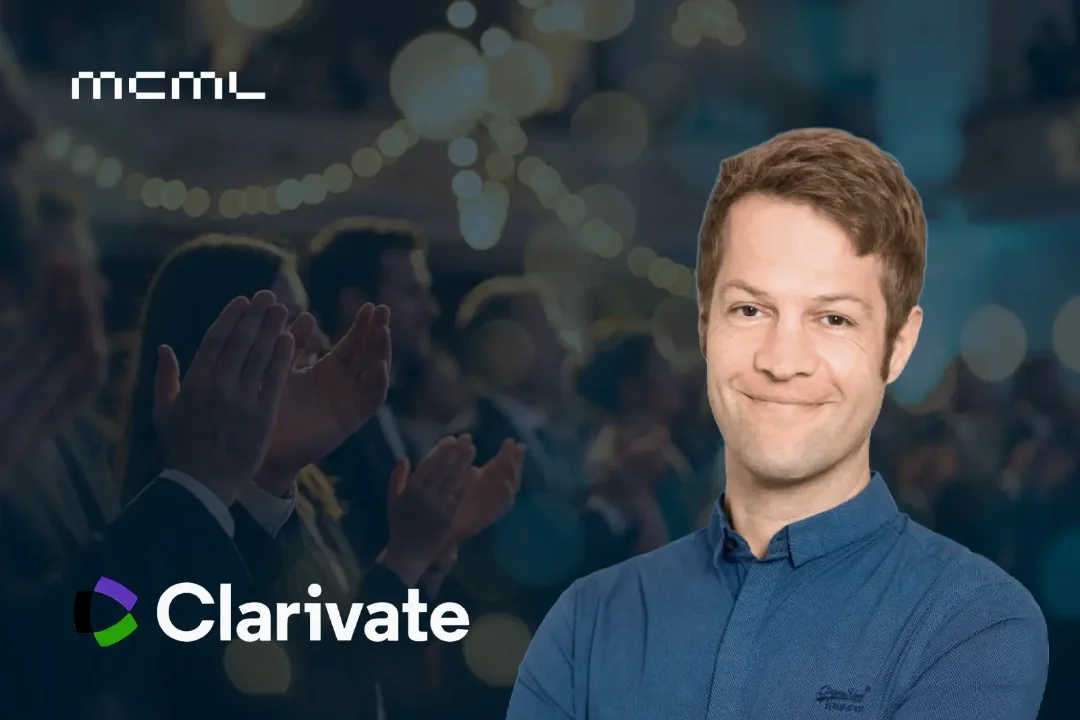
Fabian Theis Named Highly Cited Researcher 2026
MCML PI Fabian Theis has been named a Highly Cited Researcher 2026 by Clarivate in Biology and Biochemistry.