16:00 | Welcome by SWM |
16:10 | Intro and Welcome by MCML |
16:20 | Gabriel Tavares (MCML):
Leveraging Explainability for Business Processes
Understanding process variability remains a key challenge in the analysis of business processes, especially when analyzing trace variants that capture diverse behavioral patterns in modern systems characterized by high data volume and complexity. This talk presents an explanation framework that enables interpretable analysis of trace variants through both global and local explanations. The framework introduces a dual-layer explanation mechanism: at the global level, representatives are compared to a global behavioral profile to highlight key differentiating features; at the local level, individual process sequences are contrasted with their assigned representatives to reveal the specific factors driving their inclusion. The talk explores the method’s effectiveness using real data to achieve interpretable visualizations, showing how it supports transparency, trust, and diagnostic insight in trace variant analysis. |
16:35 | Denis Bytschkow (SWM):
AI Forecasting for EV Charging Solutions and Virtual Power Plants at SWM
At SWM, we leverage artificial intelligence (AI) to develop forecasting models that enhance the integration of electric vehicle (EV) charging solutions with our Virtual Power Plant (VPP). This involves the automated analysis of historical EV charging data to identify patterns and trends. Using these insights, we generate automated predictions for incoming charging sessions, enabling more efficient and adaptive VPP operations. A variety of AI algorithms are employed and evaluated to determine their suitability for productive deployment. This presentation will showcase our approach, the AI methodologies applied, and the potential benefits for sustainable energy management. |
16:50 | Nefta Kanilmaz (MCML):
Untangling Process Chaos — Leveraging Trace Clustering for Process Analysis
Real-world business processes are complex due to the wide variety of process executions and their interdependencies. Despite the availability of vasts amounts of process execution data, identifying patterns and extracting clear insights remains challenging.
Trace clustering techniques help understanding complex processes by grouping similar executions together, thereby revealing relevant structures in the processes.
This talk will present our ongoing research on advanced trace clustering methods. We will explore the motivation behind trace clustering, highlight its potential for enhancing business process analysis, and demonstrate practical applications using our framework, k-traceoids. By the end of the talk, attendees will have a clear understanding of how trace clustering techniques can facilitate effective analysis of complex business processes. |
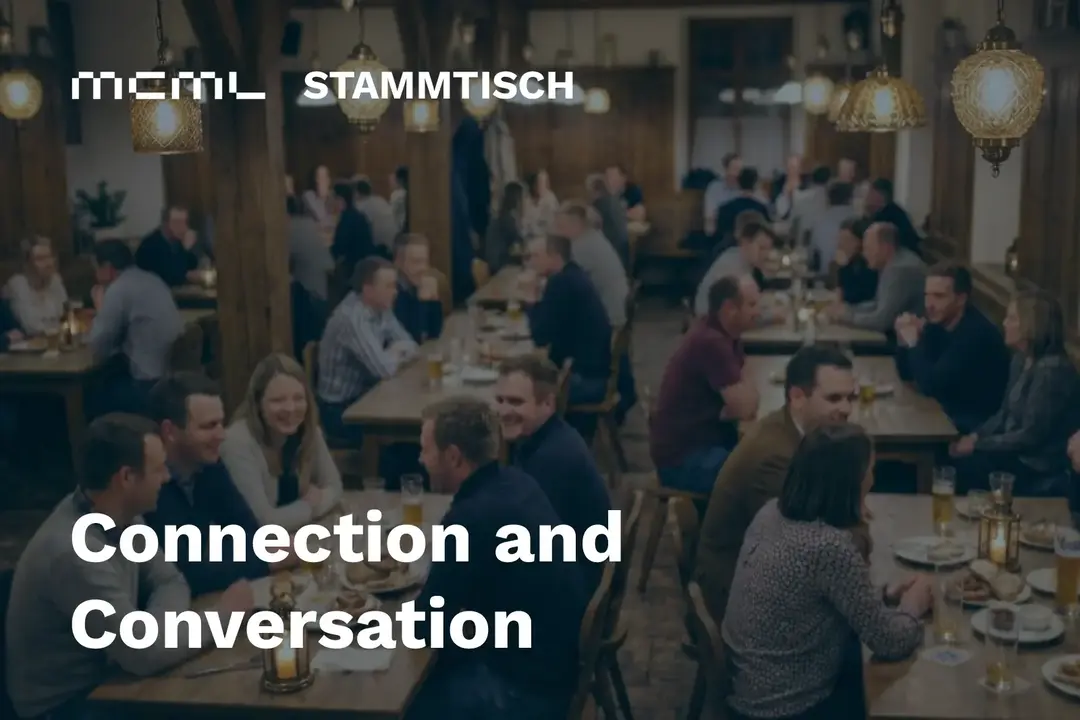
17:05 | Networking with Snacks and Drinks |